That quiet certainty is what separates him from every other threat in the series.
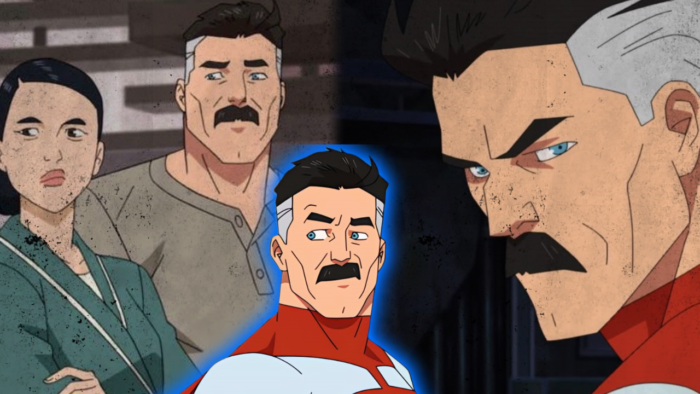
Viltrumite ideology leaves no room for doubt. Strength determines worth, and survival proves superiority. Within that system, conquest is not seen as cruelty, but as validation. If a civilization is strong enough to dominate, it deserves to exist. If it falls, then its extinction is simply the natural order. Omniman was raised inside that belief, not as a participant, but as an enforcer.
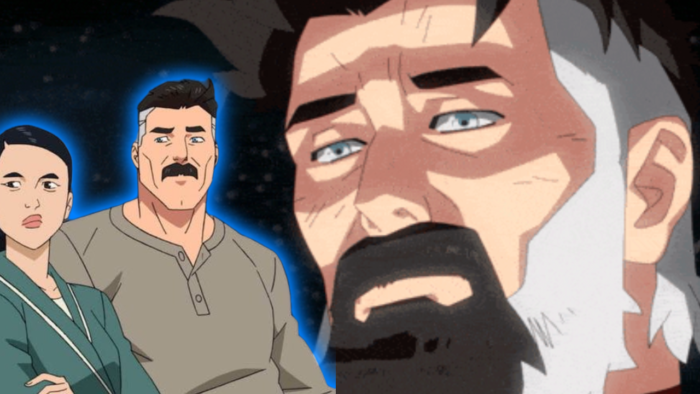
When he arrives on Earth, he doesn’t view it as a home or even a battlefield. He sees it as a future colony—one that will eventually be absorbed into something greater. Humanity, from his perspective, is temporary. Viltrum is eternal. With that mindset, his actions are not reckless or emotional; they are inevitable. He doesn’t question whether he should conquer Earth, only when.
This is what makes Omniman feel less like a character and more like a force. A man who believes he might be wrong can be reasoned with. A man who believes he is destiny cannot.
For years, that belief remains intact because it is never challenged in a meaningful way. Viltrumite doctrine works best at a distance, where the people being conquered are abstract. It begins to break down the moment those people become real.
That is where Earth changes everything.
By staying longer than intended, Omniman does something he was never supposed to do—he forms attachments. His relationship with Debbie introduces a version of connection that isn’t built on hierarchy or fear. She doesn’t see him as a superior being; she sees him as a partner. At the same time, Mark grows up believing his father is a protector, not a conqueror. These relationships force Omniman into a role that Viltrumite ideology cannot fully account for.
For a long time, he convinces himself it doesn’t matter. That Nolan Grayson is just a disguise, a role he is playing until the mission is complete. But the longer he lives that life, the harder it becomes to separate the role from who he is becoming.
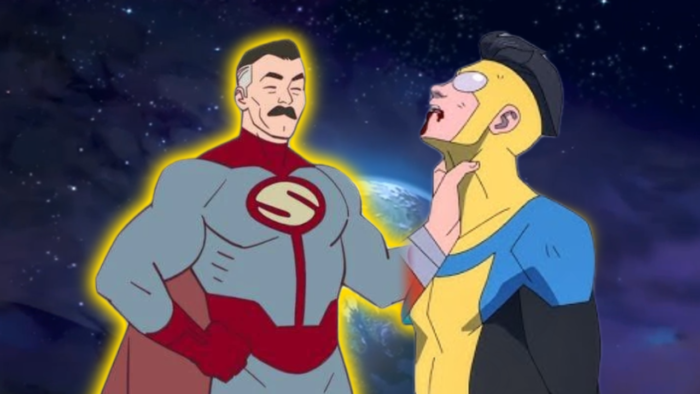
That internal conflict finally surfaces when Mark learns the truth.
Omniman expects resistance, but he assumes it will pass. Strength has always been the deciding factor, and he is unquestionably stronger. What he does not expect is conviction. Mark does not reject him because he is weak; he rejects him because he believes something fundamentally different. He values humanity not for its strength, but for its existence.
That belief directly contradicts everything Omniman was raised to accept.
What follows is not just a physical battle, but a psychological one. Omniman is confronted with a reality that doesn’t align with his worldview, creating a form of cognitive dissonance he has never experienced. His response is to double down. Every punch he throws, every act of destruction, is an attempt to reassert control over that contradiction. If he can break Mark, he can prove that his ideology still holds.
But Mark doesn’t break.
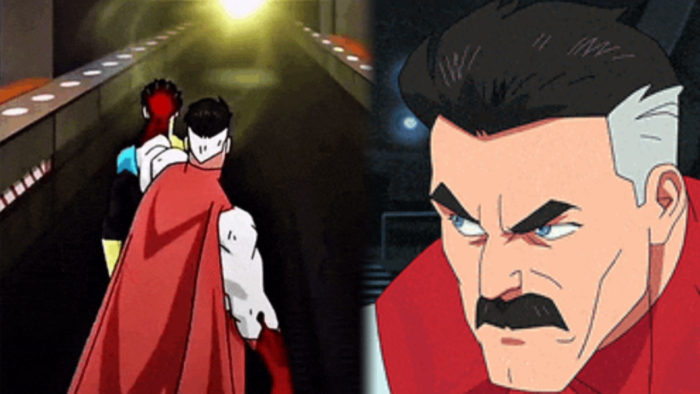
The turning point comes in a moment that reframes everything. When Omniman asks what Mark will have left after centuries have passed, he is trying to retreat back into the logic he understands—one where time erases attachment and makes human life insignificant. Mark’s response dismantles that logic completely. He doesn’t argue with strength or lifespan. He answers with something Omniman cannot measure or overpower.
He chooses him.
That choice is what finally destabilizes Omniman. For the first time, he is not feared or obeyed. He is valued. And that creates a fracture in the certainty that once defined him.
The tears that follow are not a sign of weakness, but of collapse. Omniman’s true strength was never his physical power—it was his absolute belief that he was justified. Once that belief begins to crack, everything else follows. A man who questions himself cannot act with the same inevitability as one who never doubts.
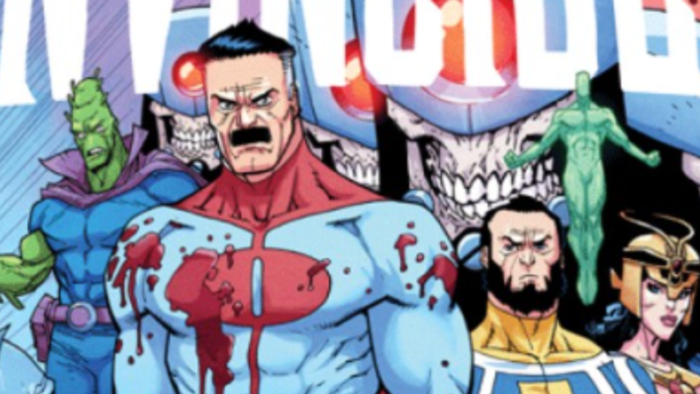
When he leaves Earth, it is not because he has been defeated in combat. It is because he can no longer maintain the certainty that made him who he was. The part of him that loves his son cannot be removed or ignored, and that alone is enough to disrupt everything he once believed.
In the end, Omniman doesn’t lose his power.
He loses the one thing that made that power unstoppable.
He loses certainty.
And without it, he is no longer a god—just a man forced to confront the possibility that he was wrong.
There are plenty of powerful characters in Invincible, but none of them feel as inevitable as Omni-Man. His strength is obvious from the start, yet what makes him unsettling isn’t the destruction he causes—it’s how easily he justifies it. Omniman doesn’t act out of rage or impulse. He acts with complete clarity, carrying out every decision as if it were already decided long before the moment arrived.
That quiet certainty is what separates him from every other threat in the series.
Viltrumite ideology leaves no room for doubt. Strength determines worth, and survival proves superiority. Within that system, conquest is not seen as cruelty, but as validation. If a civilization is strong enough to dominate, it deserves to exist. If it falls, then its extinction is simply the natural order. Omniman was raised inside that belief, not as a participant, but as an enforcer.
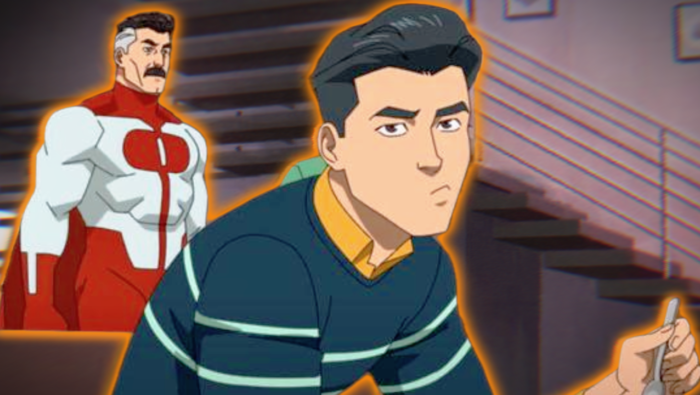
When he arrives on Earth, he doesn’t view it as a home or even a battlefield. He sees it as a future colony—one that will eventually be absorbed into something greater. Humanity, from his perspective, is temporary. Viltrum is eternal. With that mindset, his actions are not reckless or emotional; they are inevitable. He doesn’t question whether he should conquer Earth, only when.
This is what makes Omniman feel less like a character and more like a force. A man who believes he might be wrong can be reasoned with. A man who believes he is destiny cannot.
For years, that belief remains intact because it is never challenged in a meaningful way. Viltrumite doctrine works best at a distance, where the people being conquered are abstract. It begins to break down the moment those people become real.
That is where Earth changes everything.
By staying longer than intended, Omniman does something he was never supposed to do—he forms attachments. His relationship with Debbie introduces a version of connection that isn’t built on hierarchy or fear. She doesn’t see him as a superior being; she sees him as a partner. At the same time, Mark grows up believing his father is a protector, not a conqueror. These relationships force Omniman into a role that Viltrumite ideology cannot fully account for.
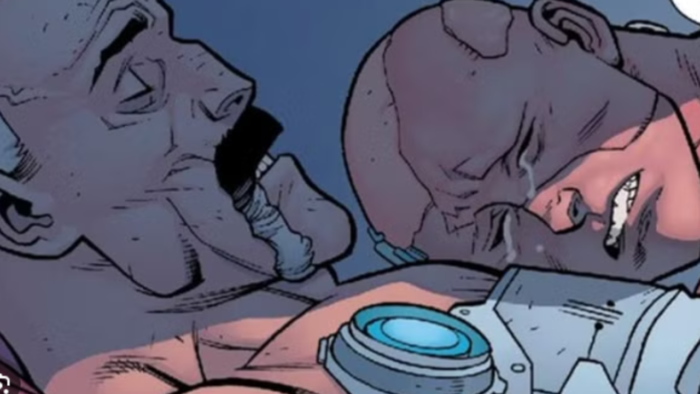
For a long time, he convinces himself it doesn’t matter. That Nolan Grayson is just a disguise, a role he is playing until the mission is complete. But the longer he lives that life, the harder it becomes to separate the role from who he is becoming.
That internal conflict finally surfaces when Mark learns the truth.
Omniman expects resistance, but he assumes it will pass. Strength has always been the deciding factor, and he is unquestionably stronger. What he does not expect is conviction. Mark does not reject him because he is weak; he rejects him because he believes something fundamentally different. He values humanity not for its strength, but for its existence.
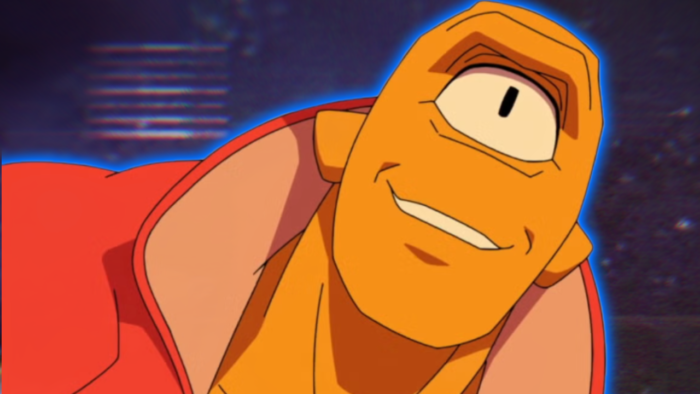
That belief directly contradicts everything Omniman was raised to accept.
What follows is not just a physical battle, but a psychological one. Omniman is confronted with a reality that doesn’t align with his worldview, creating a form of cognitive dissonance he has never experienced. His response is to double down. Every punch he throws, every act of destruction, is an attempt to reassert control over that contradiction. If he can break Mark, he can prove that his ideology still holds.
But Mark doesn’t break.
The turning point comes in a moment that reframes everything. When Omniman asks what Mark will have left after centuries have passed, he is trying to retreat back into the logic he understands—one where time erases attachment and makes human life insignificant. Mark’s response dismantles that logic completely. He doesn’t argue with strength or lifespan. He answers with something Omniman cannot measure or overpower.
He chooses him. That choice is what finally destabilizes Omniman. For the first time, he is not feared or obeyed. He is valued. And that creates a fracture in the certainty that once defined him.
The tears that follow are not a sign of weakness, but of collapse. Omniman’s true strength was never his physical power—it was his absolute belief that he was justified. Once that belief begins to crack, everything else follows. A man who questions himself cannot act with the same inevitability as one who never doubts.
When he leaves Earth, it is not because he has been defeated in combat. It is because he can no longer maintain the certainty that made him who he was. The part of him that loves his son cannot be removed or ignored, and that alone is enough to disrupt everything he once believed.