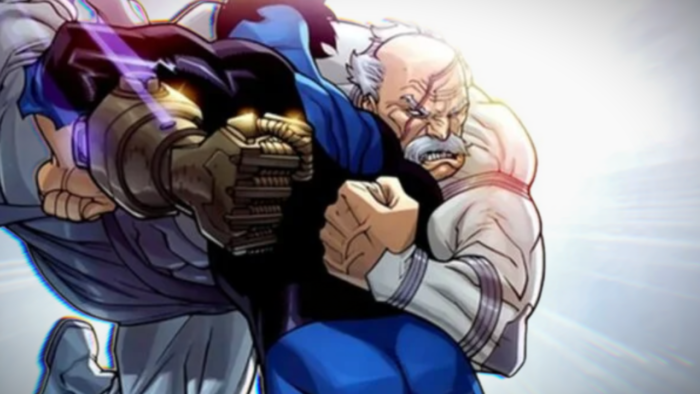

When Invincible first released, it didn’t explode overnight. Originally created by Robert Kirkman in 2003, the series spent years living in the shadow of his other massive success, The Walking Dead. It wasn’t until the animated adaptation hit Amazon Prime Video in 2021 that Invincible finally reached a mainstream audience, and once it did, it didn’t just succeed—it dominated.
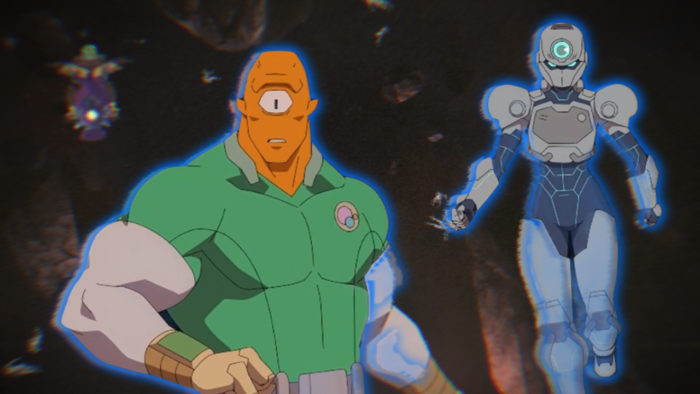
A huge part of that success comes from how grounded the show feels despite its absurd premise. Characters don’t just have powers; those powers come with consequences, limitations, and logical applications. Whether it’s Red Rush struggling with hyper perception or Duplicate keeping her real body hidden to survive, the show consistently tries to treat superpowers like real systems that follow rules.
And that’s exactly why Atom Eve stands out.
Not because she’s weak, or uninteresting, or even poorly acted, but because she breaks the one thing Invincible does better than almost any other superhero show: internal logic.
A Power That Should Solve Everything

On paper, Atom Eve might be one of the most powerful characters in the entire series. Her ability isn’t just energy projection or telekinesis. She can manipulate matter itself, turning one substance into another and reshaping reality at will.
That kind of power comes with a major problem in storytelling. If a character can theoretically do anything, then every conflict starts to feel questionable. Why didn’t she end the fight instantly? Why didn’t she solve the problem before it escalated? Why is anyone else even needed?
To deal with that, the show introduces limitations. The most important one is the mental block that prevents her from manipulating living tissue. It’s a necessary restriction, and on its own, it works. It creates boundaries and prevents her from instantly winning every situation.
The issue is that those boundaries don’t stay consistent.
The Backstory That Creates More Problems Than It Solves
Eve’s origin episode tries to explain her powers while also grounding her emotionally. She’s created as a government experiment, given a normal life, and slowly discovers that she can manipulate matter down to a molecular level. It’s a strong foundation, but the execution introduces cracks almost immediately.
Her early experiences are clearly designed to make her hesitant about using her abilities. A friend rejects her after seeing her powers, and she begins associating them with isolation and fear. That idea makes sense in theory, but the way it’s presented feels forced. Instead of a gradual emotional shift, it comes off as a convenient way to justify why she doesn’t use her abilities to their full potential later.
Then comes the bigger issue: the rules themselves.
We are told she cannot manipulate living matter, and that limitation is treated as absolute—until it isn’t. In a moment of emotional stress, she overrides that restriction completely, altering living beings and even selectively removing memories. Not only does this contradict the rule, it raises a far bigger question: if she can break the limitation once, why can’t she learn to do it again?
This single decision creates a ripple effect that impacts every future scene she’s in.
The Problem Isn’t Her Power — It’s How It’s Used
As the series continues, the gap between what Eve can do and what she actually does becomes impossible to ignore.
In fights, she defaults to creating constructs—mostly shields, barriers, and simple projectiles. These are visually consistent, but they don’t reflect the full scope of her abilities. When facing enemies whose weapons and armor are clearly non-living materials, she rarely takes the obvious step of simply removing the threat entirely.
Instead, fights drag out longer than they should, and danger escalates in ways that feel avoidable. Situations that could be resolved instantly turn into prolonged conflicts, not because Eve lacks the ability, but because the story chooses not to let her use it.
This creates a strange disconnect. The show wants her to feel powerful, but not too powerful, and instead of clearly defining that balance, it shifts her effectiveness depending on what the scene needs.
Inconsistent Limits Make the Problem Worse

If her abilities were strictly limited, the issue would be easier to accept. But the show repeatedly demonstrates that her power is vast, only to scale it back when it becomes inconvenient.
At one point, she’s able to reshape large environments, regrow plant life, and perform massive acts of reconstruction without showing meaningful fatigue. At another, much smaller actions suddenly exhaust her. There’s no clear system behind what drains her and what doesn’t, which makes her limits feel arbitrary rather than intentional.
This inconsistency removes tension from her scenes. When a character’s strength and weakness change depending on the moment, it becomes difficult to understand what’s actually at stake.
When the Character Starts Serving the Plot Instead of the World
By the time the series reaches later seasons, another issue begins to surface. Eve’s role shifts away from being an independent force and leans more toward supporting other characters, especially Mark.
This wouldn’t be a problem if it happened naturally, but combined with the inconsistencies in her powers, it starts to feel like she’s being held back not for character reasons, but for narrative convenience. She enters conflicts, contributes just enough to stay relevant, and then either steps aside or is removed from the situation entirely.
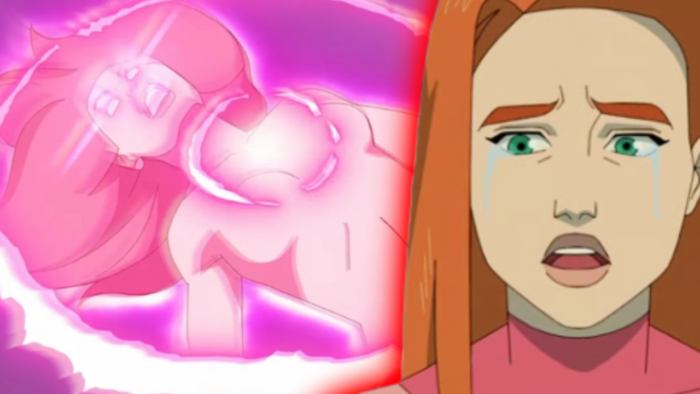
Even her most dramatic moments, including situations where she appears to be fatally injured, are resolved in ways that undermine the stakes. If she can recover from anything through a sudden surge of power, then those moments lose their impact.
The Core Issue
At its core, the problem with Atom Eve isn’t that she’s too strong. It’s that the show never fully commits to defining how strong she actually is.
A character with reality-altering abilities requires clear, consistent rules. Without them, every scene becomes a question of why those abilities aren’t being used more effectively. The audience isn’t confused about what she can do—they’re confused about why she isn’t doing it.
Ironically, this makes her feel less intelligent than she actually is, because her actions don’t reflect the logic of her own power set.
Why This Stands Out So Much in Invincible
What makes this issue more noticeable is how well the rest of the show handles similar challenges. Most characters operate within clearly defined boundaries, and their decisions make sense within those limits. That consistency is part of what gives Invincible its identity.
Eve, however, exists slightly outside that system. Her powers are so flexible that without strict control, they start to break the structure the show relies on.
Final Thought
Atom Eve is one of the most creative characters in Invincible, both in concept and potential. Her abilities open the door to some of the most interesting possibilities in the entire series, and when they’re used effectively, those moments stand out immediately.
But that same potential is also what makes her difficult to write. As even Robert Kirkman has acknowledged, a character who can do almost anything is one of the hardest types of characters to handle.
And that difficulty shows. Because at the end of the day, the issue isn’t that Eve is overpowered. It’s that the story hasn’t fully decided what that power actually means. Until it does, she’ll always feel like a character who could do everything—but somehow ends up doing less.