
At first, Nami doesn’t feel like someone you’re supposed to trust. She lies, steals, and seems ready to switch sides whenever it benefits her. Compared to Monkey D. Luffy, who is straightforward and almost painfully honest, she feels unpredictable. But Season 1 slowly reshapes that impression, revealing that everything she does is rooted in a life built on loss, pressure, and a single goal she cannot walk away from.
A childhood built on loss and survival
Nami’s early life isn’t framed around adventure or dreams. It begins with survival, and that distinction matters because it shapes every decision she makes later. She is taken in by Bell-mère, a former Marine who raises her alongside Nojiko in a quiet village. Their life is simple and strained, but it works because it is held together by care and stability. That stability is destroyed when Arlong and his crew take over the village, turning it into a controlled territory where every resident must pay for the right to live. When Bell-mère refuses to deny her daughters in order to save herself, she is killed in front of them, and that moment does more than just traumatize Nami. It forces her to understand that strength alone is not enough to protect the people she loves. From that point forward, her life is no longer about growing or exploring. It is about enduring and finding a way to regain control over something that was taken from her.
The deal that trapped her
After Arlong establishes control, he offers Nami a way out, but it is not truly freedom. He tells her that if she gathers 100 million berries, he will leave and free the village. On the surface, it sounds like a goal she can work toward, something measurable and achievable. In reality, it is a system designed to keep her trapped, giving her just enough hope to continue working under him while never actually challenging his power. Nami accepts the deal because it gives her direction, and without it, she has nothing. This is where her identity as a thief begins to take shape, not out of greed, but out of necessity. She targets pirates because they are the most immediate source of money, and in her mind, they are part of the same world that destroyed her home. Her behavior during this time, the manipulation, the lying, and the constant calculation, is not a personality flaw. It is a response to a situation where being honest or trusting the wrong person could cost everything she is trying to protect.
Why she never fully commits
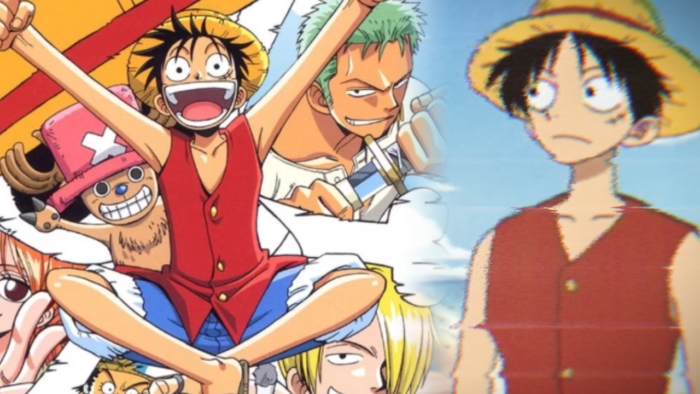
When Nami meets Luffy, the contrast between them is immediate and almost jarring. Luffy moves through the world with complete certainty, acting on instinct and emotion without worrying about consequences in the way Nami does. She, on the other hand, measures everything, always thinking ahead and protecting herself from potential loss. She joins the crew, but not in the same way as someone like Zoro. For Nami, joining is a strategy, not a commitment. She sees value in traveling with them because they provide strength and protection, but she never allows herself to fully trust them because doing so would risk losing focus on her goal. This creates a tension that builds over time, especially when she eventually leaves the crew and returns to Arlong. On the surface, it feels like betrayal, reinforcing the idea that she was never truly on their side. But the reality is more complicated. She was never choosing between loyalty and betrayal. She was choosing between staying on course toward freeing her village or getting distracted by something she couldn’t afford to prioritize.
The moment everything breaks
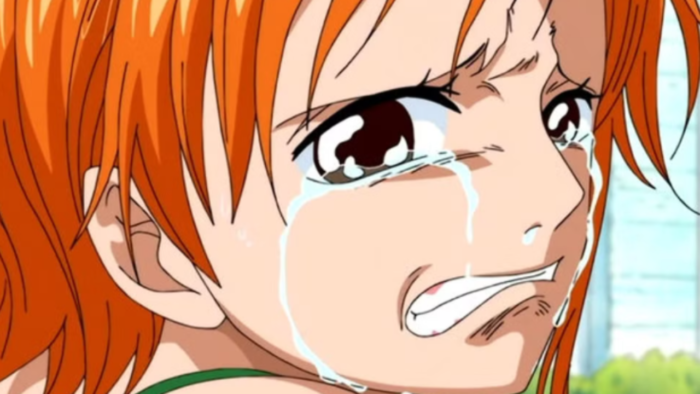
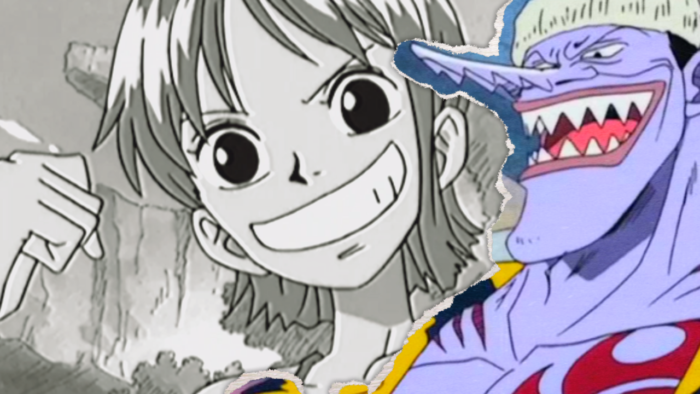
Nami’s entire plan depends on one assumption: that Arlong will honor the deal once she fulfills her end of it. When she finally gathers the 100 million berries, that assumption collapses. Arlong arranges for the Marines to confiscate her money, effectively resetting years of work in a single moment. This is where the weight of everything she has been carrying finally catches up to her. She doesn’t have a backup plan, and she doesn’t have the time or resources to start over. The system she relied on was never meant to let her succeed, and realizing that breaks something in her. When she returns to the village and begins stabbing the Arlong tattoo on her arm, it is not just an act of anger. It is the physical expression of years of frustration, grief, and exhaustion. It is the moment where she can no longer pretend she is in control of the situation.
“Help me”
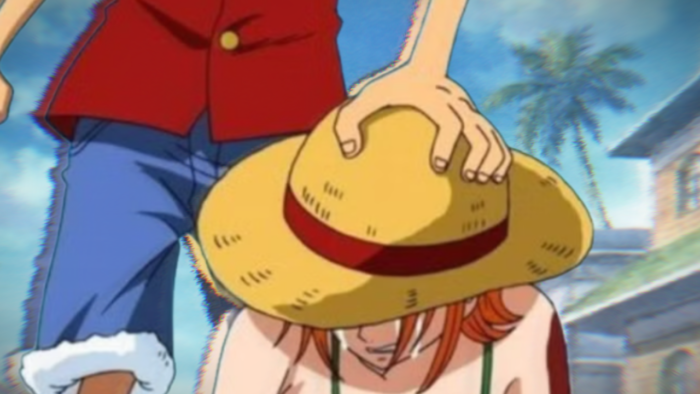
When Nami asks Luffy for help, the significance of that moment comes from how simple it is. There is no long explanation or emotional speech. She just says, “Help me,” and that is enough. Up until this point, she has handled everything on her own, believing that relying on others would only lead to disappointment or failure. Asking for help means admitting that she cannot solve this alone, and that is something she has avoided for years. Luffy’s response is equally important because he does not question her or demand details. He places his hat on her head, a symbol of trust and value, and moves forward without hesitation. This exchange redefines their relationship and marks the first time Nami allows someone else to share the burden she has been carrying.
Freedom, not just victory
When Arlong is defeated, the outcome is more than just a victory over a villain. It represents the end of a system that controlled Nami’s life for years. She is no longer bound by a deal or a number she has to reach. For the first time since her childhood, she has the ability to make a choice that is not driven by survival. What makes this moment important is that she chooses to leave with Luffy, not because she needs to, but because she wants to. That distinction changes everything about her character moving forward. Her journey is no longer about escaping something. It is about pursuing something.
Why Nami’s story stands out in Season 1
Nami’s arc works because it forces you to reevaluate everything you thought you understood about her. Her actions at the beginning of the story feel selfish and inconsistent, but once her full situation is revealed, those same actions become logical and even necessary. The story does not present her as someone who was always strong or always right. It presents her as someone who adapted to survive in a situation that offered no easy answers. By the end of her arc, her growth is not measured by how much stronger she has become, but by her willingness to trust others and accept help when she needs it.
The simple truth
Nami’s story in Season 1 is not about becoming a hero in the traditional sense. It is about carrying a burden for so long that it becomes part of who you are, and then learning that you do not have to carry it alone. Every decision she makes, no matter how questionable it seems at first, is tied to that reality. And once you understand that, her story stops being about deception and starts being about survival, trust, and finally, freedom.