There’s something that fantasy worlds lose the moment they try to explain everything. The more answers you give, the smaller the world starts to feel, and the less room there is for curiosity to breathe. What makes a setting stick isn’t just what it shows you—it’s what it refuses to explain.
That’s why moments like the dwarves digging too deep in The Lord of the Rings or the disappearance of the Dwemer in The Elder Scrolls still get talked about years later. They leave gaps, and those gaps invite people to think, to question, and to come back.
And oddly enough, World of Warcraft has a moment just like that—one that doesn’t sit at the center of the story, doesn’t get a cinematic, and doesn’t even get resolved. It’s quiet, easy to miss, and buried in a place most players pass through without a second thought. But once you notice it, it changes how you look at the world.
Because in the Southern Barrens, beneath a place called Bel Modan, there’s something that was found… and then immediately buried again.
A Warning That Leads Nowhere
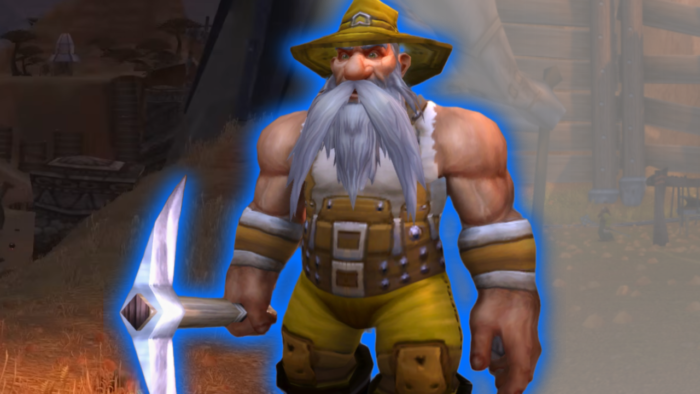
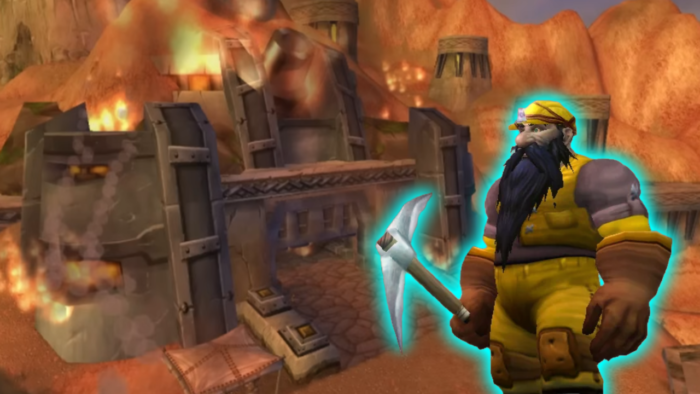
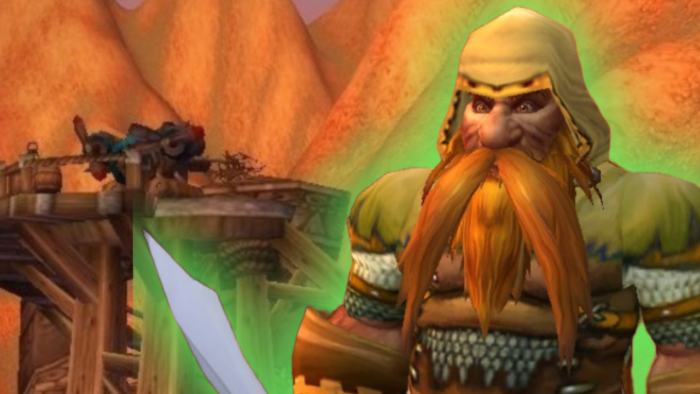
If you follow the path down into the excavation site, you’ll find a group of dwarves standing near a collapsed tunnel, and when you speak to them, you don’t get a quest or an explanation—just a warning that feels strangely out of place:
“Turn away. Before the Cataclysm, we found something. We dug something up that should have stayed buried. Pray to whatever you believe in that the landslide was enough to keep it down.”
And what makes that line stand out isn’t just what it says, but what it doesn’t say. There’s no follow-up, no resolution, and no attempt to clarify what “it” actually is, which immediately raises the question of whether this is just a small atmospheric detail… or something intentionally left open.
That uncertainty is what pushes you to look closer, because once you start asking what they found, you quickly realize you can’t answer that without first understanding why they were digging there in the first place.
Why Bel Modan Was Never Just Another Dig Site
Bel Modan wasn’t some random excavation. From the very beginning, the dwarves were digging there for a reason, because the land itself was believed to sit on top of something far older than anything they had built—an ancient Titan facility.
That alone changes the context of everything. Titan sites in Azeroth are rarely empty ruins; they’re sealed, protected, and often still active in ways no one fully understands. So when the dwarves began their work, they weren’t just uncovering history—they were interfering with something that may have been designed to stay hidden.
At the same time, their presence didn’t go uncontested. The Tauren and Quillboar tribes in the region viewed the land as sacred and resisted the excavation, which already paints the site as something that shouldn’t have been disturbed. Still, the dwarves continued, driven by the same curiosity that’s defined them across Azeroth.
And for a while, that curiosity seemed justified… until the Cataclysm reshaped the land and turned the entire region unstable, which is where things begin to shift from simple excavation into something far more unsettling.
Because somewhere between the digging and the destruction, something changed.
The Moment Things Stopped Being Normal
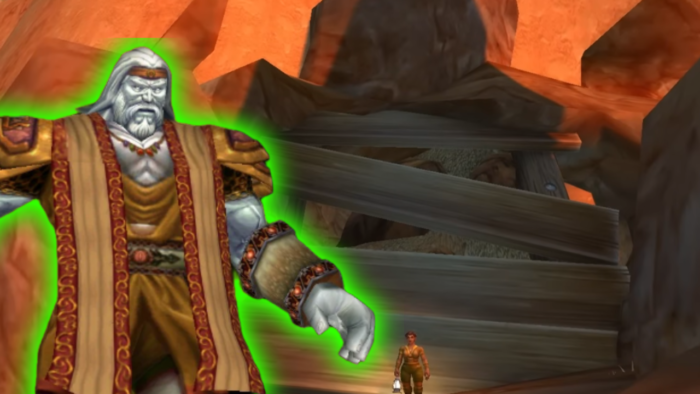
That shift becomes clearer when you look at what happened before the collapse, specifically with the discovery of an artifact known as the Tear of the Moons.
At first, it seemed like a typical find—just another relic pulled from the depths of a Titan site. But the reaction to it tells a different story. General Twinbraid didn’t see it as valuable; he saw it as dangerous and locked it away, which immediately suggests there was something off about it from the start.
Figley the Exile didn’t see it that way. He was drawn to it, convinced it mattered, and when he finally got his hands on it again, the result wasn’t subtle. He didn’t just get sick or corrupted—he was transformed into something else entirely.
That alone would have been enough to raise alarms, but what makes this incident more disturbing is what happens next. Later encounters show that whatever changed Figley didn’t stay contained. It spread, turning others into the same kind of creature almost instantly.
And at that point, it stops looking like a cursed object and starts looking like the first sign of something much larger.
Why the Usual Explanation Doesn’t Quite Fit
Naturally, the first instinct is to tie this to the Old Gods. Transformation, loss of control, and spreading corruption all point in that direction, especially with the in-game reference to the “curse of flesh,” which is associated with Yogg-Saron.
But when you slow down and actually compare the details, the connection starts to fall apart. The traditional Curse of Flesh doesn’t turn dwarves into trogg-like creatures, and modern lore makes it clear that troggs aren’t just corrupted dwarves—they’re a separate, flawed creation entirely.
So if it’s not Old God corruption, then the transformation has to come from somewhere else, and that brings the focus back to the one thing we know for certain about Bel Modan—it’s tied to the Titans.
A Different Kind of Transformation
Once you consider that, the Tear of the Moons starts to look less like a curse and more like a piece of something designed—something tied to Titan technology.
Older lore describes Titan facilities as places filled with advanced systems, many of which rely on crystalline structures to function. That detail alone makes the artifact feel less random and more like a fragment of something much bigger.
If that’s the case, then what happened to Figley wasn’t corruption in the traditional sense. It may have been a form of rewriting—his body, his structure, maybe even the way he existed as a Titan-forged being.
And if a single fragment could do that, then the implication is hard to ignore. Whatever the dwarves found deeper in the excavation wasn’t just another relic—it was likely part of a larger system, one that was never meant to be activated by anyone who didn’t understand it.
Which brings everything back to the moment the digging went too far.
The Point Where They Should Have Stopped
If you follow the timeline, it starts to come together in a way that feels less like coincidence and more like a chain reaction.
The dwarves uncover the Tear of the Moons, and it changes one of them in a way they don’t fully understand. Instead of stopping, they continue digging, driven by the belief that whatever lies beneath is worth the risk.
Eventually, they reach something else—something deeper, older, and far more dangerous. Maybe it was a Titan guardian. Maybe it was an active system responding to intrusion. Or maybe it was something entirely different, something that had been sealed away long before the dwarves ever arrived.
Whatever it was, it was enough to force them to abandon the site and seal it off completely.
And that’s where the story loops back to that single line of dialogue, because when the dwarf says, “Pray the landslide was enough to keep it down,” it changes how you interpret everything that came before it.
And that’s what makes this whole thing stick, because the game never confirms what was found, never revisits it, and never ties it into a larger storyline. It just leaves it there, buried under a collapsed tunnel, waiting for players to notice it.
There are other possibilities, of course. The nearby troll imagery could suggest something entirely different, or the connection to Razorfen Downs could hint at another kind of threat. And it’s always possible that this was meant as nothing more than a small reference with no deeper meaning.