There was a time when World of Warcraft didn’t feel like something you had to “play correctly.” It felt like a world you had to figure out. You logged in without a plan, without a guide, and without any real idea of what the best choices were. You wandered into zones you probably shouldn’t have been in yet, picked talents that sounded cool instead of optimal, and spent way too long trying to understand what a quest even wanted from you. And somehow, that confusion made everything feel bigger. It made the world feel alive, like it had secrets that belonged to you and you alone.
That feeling is harder to find now, and it’s not because the game itself changed beyond recognition. It’s because the way we approach it has completely shifted. We no longer enter World of Warcraft as explorers. We enter it already knowing the answers, or at least knowing exactly where to find them. The moment something slows us down, we solve it instantly. The moment something feels unclear, we remove that uncertainty. And without really noticing it, we’ve traded discovery for efficiency.
When Everything Has an Answer, Nothing Feels Special
One of the biggest differences between early WoW and modern WoW is how easy it is to know everything before you even start. Back then, even if you had a guide, it didn’t solve the entire game for you. You still had to interpret things, still had to experiment, still had to fail. There were gaps in your knowledge, and those gaps created moments where you had to think, adapt, and sometimes just guess.
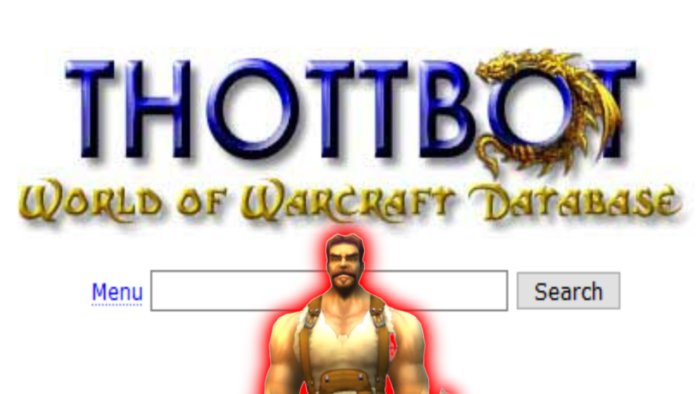
Now, there are no gaps. If you don’t know something, you can find the exact answer in seconds. You can watch someone complete the content before you even touch it. You can see the best route, the best build, the best rotation, all laid out perfectly. The mystery doesn’t slowly fade over time—it’s gone before the experience even begins.
That convenience feels great at first, but it comes with a cost. When nothing is unknown, nothing feels earned. You’re not discovering the game anymore, you’re executing it.
From Playing a Character to Following a Blueprint
There was a time when your character felt like yours because you built it based on what made sense to you. You didn’t care about whether your talent choices were optimal. You cared about whether they felt right. Maybe you made a healer that still ran into melee range. Maybe you picked abilities because they looked cool instead of because they performed well. It wasn’t efficient, but it was personal.
Today, that kind of freedom feels almost wrong. The moment you start a new character, there’s already an established “correct” way to play it. There are rankings, tier lists, simulations, and guides telling you exactly what to do. And once you know that information exists, it’s hard to ignore it. Even if you want to experiment, there’s always that underlying thought that you’re doing it wrong.
Over time, your character stops feeling like something you’re building and starts feeling like something you’re maintaining. You’re not shaping it anymore—you’re aligning it with a standard that already exists.
Add-Ons Didn’t Just Help — They Changed the Game
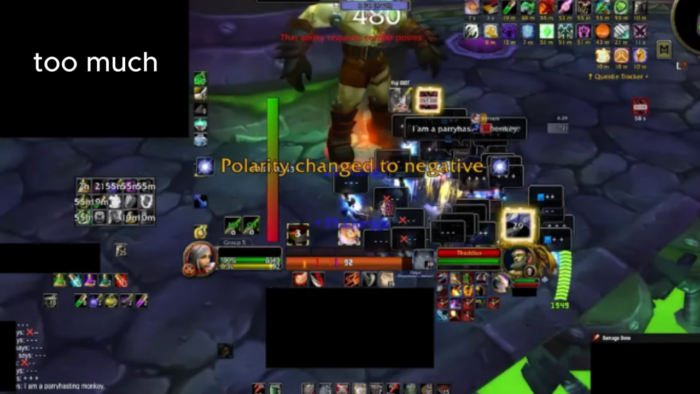
Add-ons were originally tools meant to make things easier, but they’ve grown into something much bigger. They don’t just assist you anymore—they guide you, sometimes to the point where they replace your need to think at all. Quest add-ons point you exactly where to go. Boss mods tell you what’s about to happen before it happens. Leveling guides map out your entire journey step by step.
When you follow these systems, you’re no longer reacting to the world itself. You’re reacting to instructions layered on top of the world. Instead of reading a quest and figuring it out, you follow a marker. Instead of watching a boss and learning its behavior, you follow a timer.
The game still contains all the same depth, but you’re interacting with it through a filtered version that removes uncertainty. And without uncertainty, there’s very little tension, and without tension, there’s very little payoff.
The Shift from Immersion to Background Noise
Another change that doesn’t get talked about enough is how we actually pay attention to the game. For a lot of players now, World of Warcraft has become something you play while doing something else. You’ve got a video running, Discord open, maybe even another game on standby. WoW becomes something you “have on” rather than something you’re fully inside.
That split attention changes everything. When you’re not fully focused, the world stops feeling like a place you’re in and starts feeling like something passing by in the background. Hours go by, your character progresses, but you barely remember what you actually did.
Compare that to the first time you played, when the game had your full attention. Every zone felt distinct. Every new area felt like an event. You weren’t multitasking—you were present. And that presence is a big part of what made the experience stick.
The Pressure to Keep Up
Once a game becomes “solved,” expectations naturally follow. Other players know the fastest routes, the best strategies, the most efficient ways to do everything. And when you group up with them, those expectations become your problem too.
If you want to take your time, someone else might see that as slowing things down. If you don’t know a mechanic, you’re expected to learn it quickly—or already know it. If your performance isn’t where it “should” be, there are tools that make that visible instantly.
It’s not that players are trying to ruin the experience. It’s that they’ve already experienced the slower version of the game and moved past it. For them, efficiency is the fun. But for someone looking for that original sense of discovery, it can feel like there’s no space left for it.
Why the Game Feels Different Now
At a glance, it’s easy to think something about World of Warcraft itself changed, but most of what made the early experience special is still there. The zones are still there. The quests are still there. The systems still allow for experimentation.
What changed is how much we know and how quickly we act on that knowledge. We removed the unknowns. We removed the slow parts. We removed the need to figure things out.
And in doing that, we didn’t just make the game more efficient—we made it feel smaller.
Finding That Feeling Again
You can’t go back to not knowing anything, but you can change how you approach the game. If you want that old feeling again, you have to create space for it. That means resisting the urge to look everything up immediately. It means allowing yourself to make mistakes. It means playing without constantly checking if you’re doing things the “right” way.
It might feel uncomfortable at first, especially if you’re used to playing efficiently. You might feel slower. You might feel behind. But that discomfort is part of what makes the experience meaningful again.
Because the truth is, the magic of World of Warcraft was never about being the best at it. It was about stepping into a world you didn’t fully understand and letting yourself get lost in it for a while.