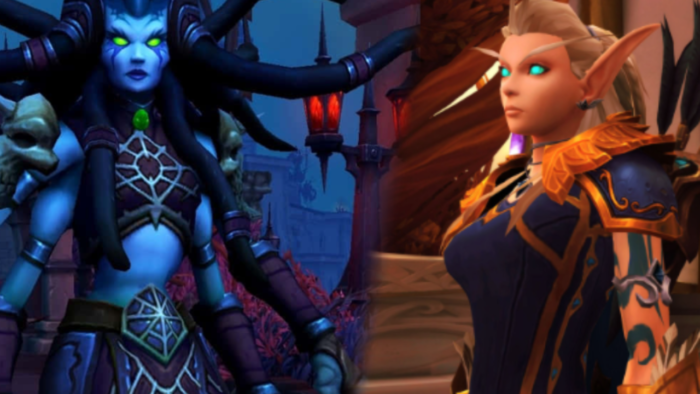
The naga are not a naturally evolved race, nor were they always the serpentine beings that haunt the oceans of Azeroth. They began as night elves — specifically the Highborne, the aristocratic elite of ancient kaldorei civilization. Their transformation into naga was the result of arcane arrogance, catastrophic destruction, and a desperate pact made in the crushing darkness beneath the sea. To understand the naga is to understand the culture they came from, the choices that doomed them, and the ideology they carried with them into their new existence.
Over generations, this privileged access fostered a widening cultural divide. While many night elves revered nature and balance, the Highborne increasingly viewed arcane power as both their birthright and proof of superiority. Magic was not simply a tool; it was a marker of status and a measure of worth. Those closest to arcane power believed themselves closest to perfection.
Queen Azshara’s court embodied this ideology. Her palace became a center of opulence and magical experimentation, where beauty, symmetry, and grandeur were treated as reflections of cosmic favor. Highborne culture evolved around the belief that arcane mastery signified divine selection, that hierarchy reflected natural order, and that refinement and indulgence were signs of cultural advancement rather than excess. In time, this worldview detached them from the natural balance that had once defined kaldorei society and replaced humility with certainty in their destined greatness.
This certainty proved catastrophic. The Highborne’s relentless use of arcane magic destabilized the fabric of reality and created a beacon in the Great Dark Beyond. Their spellcasting drew the attention of Sargeras, the fallen titan who sought to annihilate creation. Rather than recoil from this presence, Azshara and her inner circle interpreted it as confirmation of their importance. They believed they had been chosen to usher Azeroth into a new era of perfection.
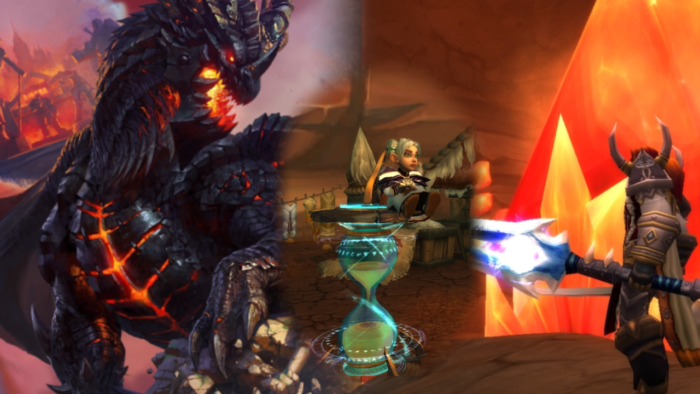
Their objective became the opening of a portal through the Well of Eternity to allow Sargeras entry into the world. To them, this was not treachery — it was transcendence.
Resistance to the Burning Legion’s arrival sparked the War of the Ancients, a conflict that tore across the world. When defenders succeeded in disrupting the portal, the Well of Eternity collapsed in a catastrophic magical implosion. The resulting cataclysm, known as the Great Sundering, shattered the single continent of Kalimdor and reshaped the face of Azeroth. Entire regions were swallowed by the sea, including Zin-Azshari itself.
Queen Azshara and her loyal Highborne were dragged beneath the ocean as the land collapsed around them. Trapped in the suffocating depths, crushed by pressure and darkness, they faced slow death by drowning.
It was in this abyss that Azshara heard a voice.
More than ten thousand years before the present age, night elf civilization stood at the height of its power. At its center lay the Well of Eternity, an immense font of arcane energy that shaped the kaldorei empire’s prosperity, architecture, and magical advancement. Queen Azshara ruled from the magnificent capital of Zin-Azshari, and under her reign the empire flourished in beauty, wealth, and arcane achievement. Within this society, the Highborne occupied the highest tier. They were nobles, magistrates, and master sorcerers granted privileged access to the Well’s power, and their identity became inseparable from arcane mastery.
The Old God N’Zoth, imprisoned deep beneath the ocean floor, offered salvation. In exchange for loyalty, he promised to spare them from death. With her people moments from extinction, Azshara accepted the bargain.
The Old God did not restore them.
He remade them.
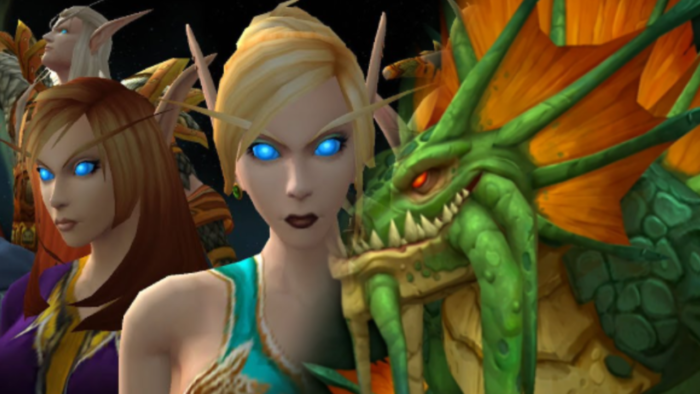
Their elegant night elf forms twisted into serpentine bodies suited to the depths. Skin hardened into scales, limbs reshaped into fins and claws, and their physiology adapted to survive crushing pressure and lightless waters. They emerged transformed into the naga — beings designed for the abyss.
The change extended beyond physical adaptation. While the naga retained their intelligence and arcane aptitude, their minds were altered by void influence, their devotion to Azshara intensified, and their worldview hardened into something colder and more absolute. They were no longer merely survivors of a fallen empire; they had become a new people forged through catastrophe and corruption.
In the deep ocean, the naga began to rebuild civilization in the image of what they had lost. Their new society preserved the hierarchical structure of Highborne culture while adapting to their transformed existence. Queen Azshara’s authority evolved into absolute rule, reinforced by reverence that bordered on divine devotion. Social rank remained closely tied to magical power, proximity to the queen, and military strength.
Naga society developed clearly defined roles. Sorceresses and tide priestesses carried forward the Highborne tradition of arcane mastery while incorporating abyssal and void-touched energies. Warriors and myrmidons served as disciplined soldiers enforcing Azshara’s will, while noble castes preserved the rigid hierarchy that had once governed Zin-Azshari. Their culture continued to equate power with legitimacy and obedience with order.
Despite their transformation, the naga retained their ancient magical traditions. Their spellcraft reflected Highborne techniques shaped by millennia of arcane refinement, now fused with darker influences drawn from the depths. They learned to command sea creatures, shape coral and stone into structures, and navigate a world without sunlight. In place of forests and moonlit temples, their domain became the endless twilight of the ocean floor.
The naga were created through the convergence of three forces: the Highborne’s obsession with arcane supremacy, the cataclysm of the Sundering that cast them into the abyss, and the void-tainted salvation offered by N’Zoth. Their transformation was both punishment and preservation — a curse that ensured survival while binding them to a new and alien existence.
Yet beneath their scales and serpentine forms remain the echoes of the empire they once were. Their devotion to hierarchy, reverence for magical power, belief in cultural superiority, and loyalty to a divinely elevated ruler all mirror the ideals of the Highborne. The naga are not a civilization born anew; they are the remnants of a fallen aristocracy, reshaped by catastrophe and sustained by the memory of lost grandeur.