
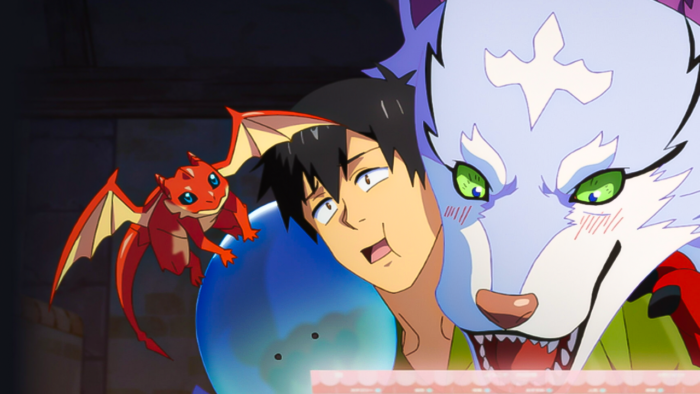
The isekai genre is loud. Every season brings bigger powers, higher stakes, and protagonists who become gods by episode three. Somewhere in all that noise, the Campfire Cooking in Another World anime quietly slipped through — and for a lot of people, it ended up being exactly what they didn’t know they were looking for.
It never tried to dominate the conversation. It never tried to outdo anyone. And somehow, that’s what made it special.
An Isekai That Chooses Calm Over Chaos
Most isekai are about escalation. Stronger enemies. Bigger threats. Louder moments.
Campfire Cooking in Another World does the opposite.
Mukoda Tsuyoshi isn’t special. He isn’t chosen. He’s summoned by accident and immediately realizes he wants nothing to do with being a hero. His only skill lets him access a modern grocery store — and instead of turning that into a gimmick, the anime treats it as a way to survive.
Fans constantly say this is why the show feels different. Mukoda doesn’t want glory. He just wants to live comfortably, eat well, and not die. That simple motivation makes the world feel more real than any demon king ever could.
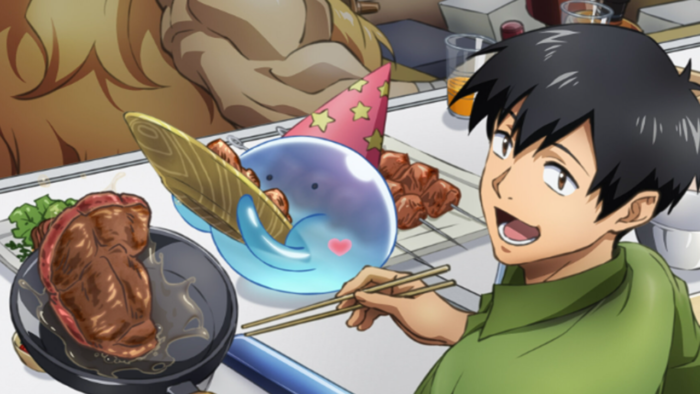
Food That Actually Means Something
In the Campfire Cooking in Another World anime, food isn’t just something characters eat between plot points. It’s the emotional core of the story.
The cooking scenes slow everything down. You watch ingredients being prepared. You see reactions. You feel the satisfaction of a good meal after a long journey. Fans often say these scenes made them relax in a way no other isekai does — like the show is giving you permission to breathe.
A lot of people describe it as “the anime I put on when I’m tired,” and that’s not an insult. That’s praise.
Power Without the Power Fantasy
Mukoda ends up traveling with absurdly powerful companions. Fel is a legendary Fenrir. Sui becomes terrifyingly strong. And yet, the show never turns into a flex.
That’s something fans bring up all the time: the power is there, but it’s never the point.
Fel and Sui exist to protect the journey, not hijack it. The story doesn’t chase bigger fights. It stays focused on travel, safety, and small moments. That restraint is rare — especially in isekai.
Why Fans Call It a “Comfort Isekai”
This is probably the most common fan take:
Campfire Cooking in Another World is comfort food in anime form.
There’s no looming apocalypse. No ticking clock. No constant dread. Episodes feel complete on their own. You can watch one, feel satisfied, and stop — or keep going because it feels good, not because you’re anxious about what happens next.
Some fans even say it feels more like a fantasy road trip than a traditional isekai, and that comparison fits perfectly.
Why It Was So Easy to Miss
Ironically, the same things that make the Campfire Cooking in Another World anime special are why it flew under the radar.
It didn’t scream for attention. It aired alongside flashier shows. Its premise sounded simple, almost boring, on paper. Many fans admit they skipped it at first — and then came back later wondering how they missed it.
That’s the mark of a hidden gem.
A Different Kind of Escapism
Most isekai sell the fantasy of power.
This one sells the fantasy of peace.
A safe campfire.
A full stomach.
Good company.
Another place to visit tomorrow.
That’s why the show sticks with people. It doesn’t try to overwhelm you. It meets you where you are.
Final Thoughts
The Campfire Cooking in Another World anime isn’t trying to be the best isekai ever made. It’s trying to be something gentler — and that’s why it works.
In a genre obsessed with more, this anime quietly chose enough.
And for many fans, that made all the difference.