The Fire Nation is often remembered for one thing: the Hundred Year War. Flames. Warships. Sozin’s Comet. Ozai standing above a burning world.
But the Fire Nation’s political story is much bigger than its role as the antagonist of history. It is the story of how power concentrates, how national identity is shaped and reshaped, and how a country tries to rebuild itself after becoming the villain.
From its early spiritual foundations to its imperial peak and finally to its modern era of restraint, the Fire Nation’s political evolution reveals a consistent pattern: when authority is centralized in one ruler, the fate of the nation rises and falls with that person’s character.
Understanding that pattern means going back to the beginning.
Sacred Authority and the Rise of Absolute Rule
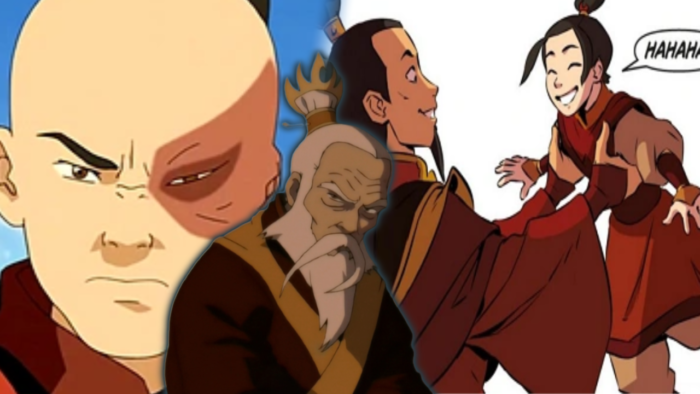
In its early history, the Fire Nation was not simply defined by a single unchecked monarch. Religious authority played a meaningful role in legitimizing power. The Fire Sages served as spiritual leaders and ceremonial officials, overseeing coronations and sacred rituals, including recognizing the Avatar when born within the Fire Nation.
Their presence shows that political authority and spiritual legitimacy were intertwined. The throne was not merely inherited; it was sanctified.
Over time, however, the Fire Nation’s system solidified into an absolute monarchy. The Fire Lord became supreme ruler—head of state, military commander, and living symbol of national identity. The monarchy no longer shared power in any meaningful way. Authority was centralized.
This system created efficiency and stability, but it also created vulnerability. If the Fire Lord ruled wisely, the nation flourished. If the Fire Lord ruled ruthlessly, the entire state machinery amplified that ruthlessness.
That tension defines Fire Nation politics from this point forward.
Clan Rivalries and the Fear of Internal Division
Even in a monarchy, power rarely exists without competition. Early Fire Nation politics included powerful noble clans that wielded wealth and influence. These families could rival the throne’s authority, creating tension beneath the surface of unity.
One of the clearest examples of this internal instability is the Camellia-Peony War, a succession conflict rooted in noble rivalries. It was not merely a dispute over leadership; it was a struggle over legitimacy and control.
The lesson the Fire Nation took from this era was simple: division weakens the state.
From that point forward, unity became sacred. Political dissent began to resemble disloyalty. Internal fractures were treated as existential threats.
This fear of division would later justify harsh centralization and a rigid political structure that discouraged opposition.
Centralization and the Strength of the Throne
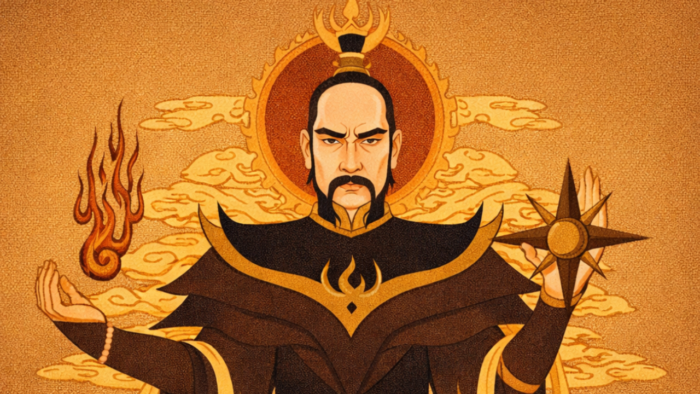
Fire Lord Zoryu represents a turning point in consolidating authority. Faced with powerful clans, Zoryu moved to weaken their influence and strengthen centralized royal control.
This shift mattered deeply. The Fire Lord was no longer a ruler negotiating with powerful families; he became the uncontested political center of the nation.
By the time later rulers inherited the throne, the state had become structured around obedience. The monarchy was not symbolic. It was the engine of governance.
This structure made the Fire Nation strong. It also made it capable of something far more dangerous: sustained imperial ambition.
Sozin and the Politics of Destiny
Under Fire Lord Sozin, the Fire Nation’s political system found its defining ideology.
Sozin did not merely start a war. He framed expansion as destiny. He believed the Fire Nation had a responsibility to share its greatness with the world. Conquest became moralized. Expansion became duty.
This shift transformed politics into ideology. The Fire Lord was no longer just ruler of a nation. He became the architect of a global mission.
Because authority was centralized, dissent had little room to grow. The state, military, and education system could align behind a single narrative: the Fire Nation was meant to lead.
When imperialism becomes part of national identity, war becomes easier to justify.

The Machinery of Empire: Azulon and Continuity
Fire Lord Azulon inherited Sozin’s project and ensured its continuation. While less dramatic in personality, Azulon’s rule demonstrates how empires survive not only on ambition but on administration.
The war endured because the state structure supported it. Generations were raised under its ideology. The monarchy remained stable.
The Fire Nation’s political system proved it could sustain long-term conflict without internal collapse. That durability made it formidable.
It also made reform far more difficult once the war ended.
Ozai and the Extremes of Absolute Power
If Sozin established imperial ambition, Fire Lord Ozai pushed it to its logical extreme.
Ozai did not aim merely to win the Hundred Year War. He sought to reshape the world’s political order entirely. During the events surrounding Sozin’s Comet, he declared himself “Phoenix King,” signaling his intent to rule not just the Fire Nation, but the world.
This was the inevitable danger of absolute monarchy. With no institutional checks, the Fire Lord’s ambition could escalate without restraint.
The same system that once ensured stability now magnified extremism.
When Ozai fell, the war ended, but the political structure that enabled him remained.

Zuko’s Dilemma: Reforming the Throne Without Removing It
Fire Lord Zuko inherited a nation defined by conquest. His challenge was unprecedented: transform a war-driven empire into a responsible global partner without dismantling the monarchy itself.
Post-war tensions surfaced immediately. The removal of Fire Nation colonies from Earth Kingdom territory became politically complex. Generations had lived in those colonies. Identities had blended. “Go home” was no longer simple.
These conflicts, explored in The Promise, reveal the difficulty of post-imperial governance. Zuko had to balance justice with stability, international expectations with domestic resistance.
He also faced internal opposition. The New Ozai Society sought to restore the previous regime’s ideology. Nostalgia for glory proved politically powerful.
Reform was not just about changing policies. It was about reshaping national identity.
The Modern Era: Caution Over Conquest
By the time of Fire Lord Izumi, the Fire Nation had entered a new political phase.
The monarchy remained, but its posture changed. In an era marked by new global threats, Izumi chose restraint over aggression. She resisted calls to reenter large-scale conflict, signaling a deliberate break from the nation’s past.
This decision represents a profound shift in Fire Nation politics. Once defined by expansion, it now defined itself by caution.
The Fire Nation did not abandon monarchy. It redefined what monarchy would represent.
The Core Political Pattern
Across centuries, Fire Nation politics reveal a consistent structure. Authority is centralized in the Fire Lord. National unity is prioritized over internal dissent. Identity can be shaped by ideology, either imperial ambition or post-war humility. Stability depends heavily on the character of the ruler.
This structure enabled greatness. It enabled catastrophe. And it continues to shape the nation’s future.
The Fire Nation’s story is not simply about war. It is about power, how it gathers, how it justifies itself, and how difficult it is to control once unleashed.
In the end, the Fire Nation’s greatest political challenge remains the same as it was centuries ago.
Can a system built on absolute authority truly safeguard itself from repeating its darkest era?
The modern Fire Nation seems determined to answer yes. But history has shown how easily the flame can spread.