For years, Avatar: The Last Airbender has presented a clear and devastating truth: after the Fire Nation’s assault on the Air Temples, Aang was believed to be the last Air Nomad. The genocide ordered by Sozin was designed to erase an entire culture in a single coordinated strike.
Yet in expanded franchise material, another name appears. Her name is Malu.
While she does not appear in the animated series itself, Malu is referenced in supplemental lore connected to the Avatar: The Last Airbender Trading Card Game and later preserved through fan and database documentation. Her story offers a striking “what if” within the broader history of the Avatar world.
The Origins of Malu’s Story
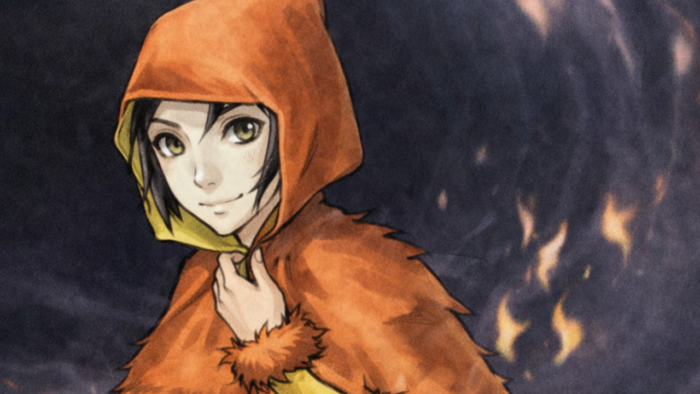
According to expanded lore, Malu was an Air Nomad born at the Eastern Air Temple. When Fire Nation forces attacked at the start of the Hundred Year War, her mother reportedly hid her inside a cave to protect her from the invasion. While nearly every monk and airbender at the temple perished, Malu survived.
Unlike Aang, whose survival depended on being frozen in an iceberg, Malu’s survival was immediate and physical. She did not escape through time. She endured in secrecy.
Sources connected to her character describe her as living in isolation following the genocide. With no surviving masters to guide her, she is said to have trained herself in airbending, gradually mastering the techniques necessary to survive in the mountains surrounding the temple.
Although these accounts are not part of the primary animated canon, they form a consistent narrative within supplemental materials and fan-maintained lore databases.
Life in Isolation After the Genocide
The Air Nomads were pacifists, spiritual wanderers who valued detachment from worldly conflict. Their temples were places of meditation and training, not military fortresses. The Fire Nation’s attack was strategic rather than reactive, intended to eliminate the next Avatar before that individual could rise to challenge Fire Nation expansion.
If Malu survived as described, her life would have represented a stark departure from traditional Air Nomad existence. Instead of community and shared learning, she would have faced solitude. Instead of formal mentorship, she would have relied on instinct and memory.
Expanded descriptions suggest that over time she became known to nearby villagers as a mysterious figure who appeared and vanished like the wind. Stories began circulating of a spirit-like presence defending mountain passes and natural areas from Fire Nation patrols. She reportedly earned nicknames such as the “Ghost Witch” or “Phantom Wind,” reinforcing her almost mythic status.
Canon Status and Continuity
It is essential to clarify Malu’s place within the franchise. She does not appear in the original animated series, nor in the mainline graphic novels that continue the story. In official series canon, Aang remains the only confirmed surviving Air Nomad at the time of the Hundred Year War’s conclusion.
Malu’s existence comes from supplementary materials and extended franchise content rather than the core narrative overseen by the series’ creators. As a result, she occupies a space often referred to as secondary or expanded continuity.
This distinction matters for accuracy, but it does not diminish her narrative significance within the broader fan community.

A Survivor Between History and Legend
Whether interpreted as secondary canon or as a compelling piece of extended lore, Malu stands as a reminder that history is often more complicated than a single narrative allows.
She does not replace Aang’s role as the last Air Nomad within the official storyline. Instead, she occupies the margins of that history, existing in the space between tragedy and possibility.
In a world where airbending was nearly erased, the idea of a hidden survivor moving silently through the mountains captures something central to the spirit of the Air Nomads themselves. The wind does not always disappear. Sometimes it simply moves beyond sight.