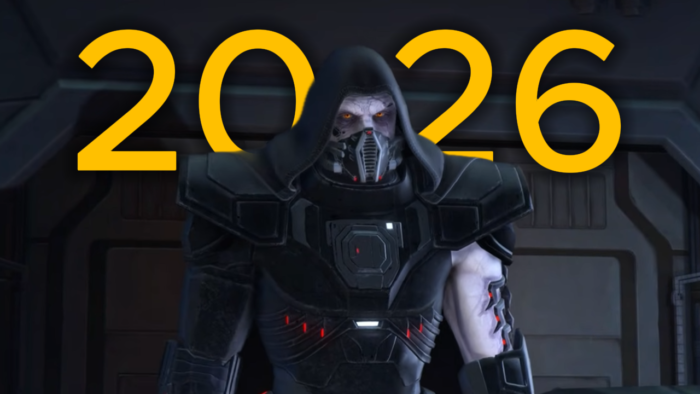
Fifteen years is a long time in the MMO space. Entire franchises rise and fall in that window. Yet Star Wars: The Old Republic, first released in 2011, is still here — still updating, still played, and still debated every single year.
So the real question is simple: is it actually worth your time in 2026?
The honest answer is yes — but only if you understand what the game truly is.
A Rocky Beginning That Shaped Its Reputation
When SWTOR launched, it aimed high. Marketed as a fully voiced, cinematic RPG built inside an MMO, it promised meaningful choices, companion relationships, and deep Star Wars storytelling. In that regard, it delivered.
Technically, though, the launch was rough. Performance issues, bugs, and structural limitations stuck to the game’s reputation for years. In the MMO world, first impressions tend to linger. Even when improvements come later, the narrative rarely resets.
Fast forward to 2026, and while the game has improved in stability and quality-of-life systems, some of that early DNA is still visible. It feels like a modernized 2011 MMO — not a brand-new one.
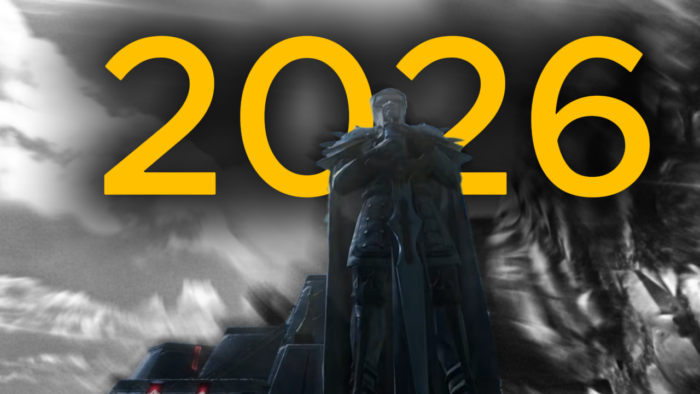
The Real Reason the Game Survived: The Story
If there is one pillar holding this game upright after fifteen years, it is the storytelling.
Not “good for an MMO” storytelling. Legitimately strong RPG writing.
Each class campaign functions like its own standalone Star Wars series. You can play as a Sith Warrior rising through political power struggles, a Jedi Knight confronting ancient threats, or an Imperial Agent navigating espionage and moral gray zones. The Imperial Agent storyline in particular is frequently cited as one of the strongest narrative arcs in MMO history.
Choices matter. Characters remember what you did. Some decisions echo years later in expansions. Your alignment with the Light or Dark Side changes dialogue, affects relationships, and even alters your character’s physical appearance over time.
Even though the game exists in Star Wars Legends continuity rather than current canon, it understands the core themes of Star Wars — power, temptation, ideology, loyalty — in a way that feels authentic.
If you are here for a Star Wars RPG experience first and an MMO second, the game still delivers.
A New Era Under Broadsword
In recent years, development transitioned from BioWare to Broadsword. Initially, that move sparked concern that the game was being placed into quiet maintenance mode.
Instead, the result has been steady support.
Content updates continue. Communication has stabilized. And most importantly, the long-awaited shift from DirectX 9 to DirectX 12 is underway.
That technical upgrade matters more than it sounds. DirectX 9 has limited how efficiently the game uses modern hardware. Moving to DX12 opens doors for improved performance, visual updates, and more ambitious design possibilities going forward. It does not automatically transform the game overnight, but it removes one of its oldest limitations.
For the first time in years, the game feels like it has forward momentum rather than just survival.
Combat: Functional, Familiar, Not Revolutionary
Combat remains traditional tab-target MMO design.
Abilities operate on cooldown rotations. Boss mechanics often follow familiar patterns: avoid telegraphed attacks, manage positioning, handle scripted phases. In higher-end operations, coordination matters. In most other content, difficulty remains accessible.
For casual players, this accessibility is a strength. The combat is readable, comfortable, and thematically satisfying. Lightsabers feel like lightsabers. Force powers look impressive.
For players seeking deep mechanical challenge, it can feel repetitive. Outside of higher-difficulty content, encounters rarely push the system to its limits.
It is not broken. It is simply conventional.
Endgame: Defined by Style as Much as Skill
On paper, the endgame includes flashpoints (dungeons), operations (raids), PvP, and space combat modes.
In practice, many players treat cosmetics and character customization as the true long-term progression.
Armor sets, mounts, dyes, strongholds (player housing), and companion aesthetics offer deep customization. The game’s outfit designer and dye system allow players to create striking character designs. Strongholds let you decorate personal spaces with collectibles earned through achievements or purchased through the in-game economy.
For some players, increasing damage numbers is the goal. For others, perfecting their character’s look is the real endgame.
SWTOR supports both — but it clearly shines more in the latter category.
Monetization: Structured but Manageable
The game operates on a three-tier model:
- Free-to-play with restrictions
- Subscriber with full access
- Preferred status for former subscribers retaining partial benefits
Subscribing unlocks all expansions available at the time. Canceling retains that access permanently. To access future expansions, you resubscribe briefly.
For story-focused players, this system is flexible. Subscribing periodically for new content is practical. For players aiming to engage deeply in progression systems, staying subscribed long-term is more comfortable.
There is a cosmetic cash shop and a player-driven economy influenced by premium items, but the core story content remains accessible without aggressive monetization barriers.
The Legacy System: Encouraging Replayability
One of the game’s strongest systems is its Legacy feature.
Completing class stories unlocks account-wide benefits. Datacrons hidden across planets grant permanent stat boosts for all characters. Alignment progression can unlock cross-faction combat styles.
Rather than discouraging alternate characters, the game actively rewards them. Given that each class campaign offers a unique narrative experience, replayability is not just encouraged — it is built into the design.
So, Is It Worth It?
If you are searching for a mechanically demanding MMO to main for the next five years, there are stronger options.
If you want a Star Wars RPG with fully voiced dialogue, meaningful choices, memorable companions, and cinematic storytelling that still holds up in 2026, Star Wars: The Old Republic remains one of the best experiences available.
It is not cutting-edge. It is not flawless. It shows its age in places.
But it does something almost no other MMO has committed to at this scale: it prioritizes narrative depth over mechanical complexity.
Fifteen years later, that identity is intact.
And for the right kind of player, that makes it more than worth playing.