For years, Hytale felt like the game that would never come out.
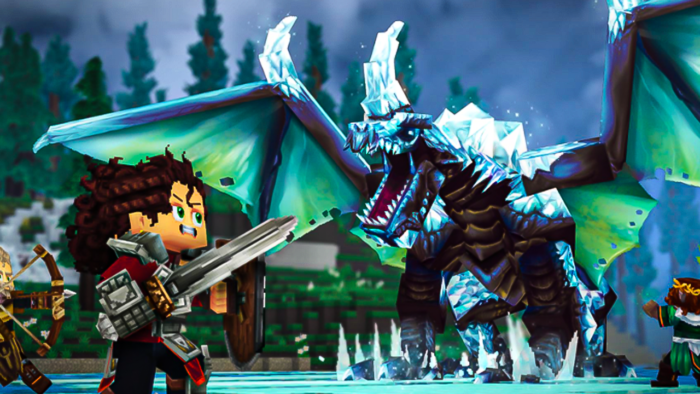
Announced in 2018 with a trailer that instantly went viral, the sandbox RPG from Hypixel Studios promised something bigger than Minecraft: structured adventures, RPG systems, moddable tools, and a blocky world built for exploration, not just construction. Expectations skyrocketed. Development dragged on. Updates slowed. And in mid-2025, Riot Games officially canceled the project.
That should have been the end of the story.
Instead, Hytale has pulled off one of the most unlikely comebacks in modern game development — and the way it happened explains a lot about why the game struggled in the first place.
The Game That Tried to Be Everything
Hytale’s original pitch was ambitious to the point of excess. It wasn’t just a sandbox, or just an RPG and definitely not just a modding platform. It was supposed to be all of those things at once, polished to perfection and ready to compete with one of the biggest games ever made.
When Riot acquired Hypixel Studios in 2020, many fans assumed that ambition would finally be supported by resources. What actually happened was the opposite. The project’s scope expanded. Technology changed. Internal resets stacked up. The farther Hytale went, the harder it became to release anything at all.
By June 2025, Riot pulled the plug, citing the realities of long development timelines and shifting priorities. In an industry where canceled games almost never return, Hytale looked finished.
The Part No One Expected
In November 2025, Hytale’s original co-founder, Simon Collins-Laflamme, announced that he had bought the rights to the game back from Riot Games.
That move alone was shocking. Large publishers rarely sell back canceled projects, and creators almost never get a second chance after a shutdown. But control of the Hytale IP returned to its creators, development resumed, and members of the original team were rehired.
Hytale wasn’t being rebooted by a new studio. It was being revived by the people who started it.
A Smaller Plan, on Purpose
The revived version of Hytale is not pretending nothing went wrong.
Instead of chasing a perfect, feature-complete launch, Hypixel Studios has shifted to a focused Early Access strategy. The team returned to its original internal engine, reduced scope, and committed to releasing a playable version first — then expanding it over time.
That decision reframes Hytale from a promise into a process.
Rather than asking players to wait indefinitely for the “real” game, the new approach is about shipping something tangible and building forward with community feedback.
When Players Can Finally Play It
Hytale is now scheduled to launch into Early Access on January 13, 2026, starting on Windows PC. This will be the first publicly playable version of the game — ever.
The launch version won’t include every system that appeared in early trailers or developer blogs. Some features, including advanced modding tools and expanded game modes, will arrive later. Linux support is confirmed, macOS is planned, and consoles remain a future conversation.
For a game that once felt trapped in development purgatory, a concrete date matters more than feature lists.
Why This Attempt Has a Better Shot
The original version of Hytale didn’t struggle because the idea was bad. It struggled because it tried to justify its own hype before it existed.
The new version is different in one key way: it’s no longer trying to prove it can be everything at once.
Early Access lowers the stakes. It gives the team room to iterate, cut, and adjust without the pressure of delivering a “forever game” on day one. It also aligns with how players actually engage with sandbox games today — as evolving platforms, not finished products.
In that sense, Hytale’s revival isn’t just a comeback. It’s a course correction.
The Risk Is Still There
None of this guarantees success.
Early Access launches live or die on trust. Years of hype don’t disappear overnight. And Hytale will still be compared — fairly or not — to Minecraft, to modded servers, and to the game fans imagined it would be years ago.
But for the first time in a long time, Hytale is defined by forward momentum instead of delay.