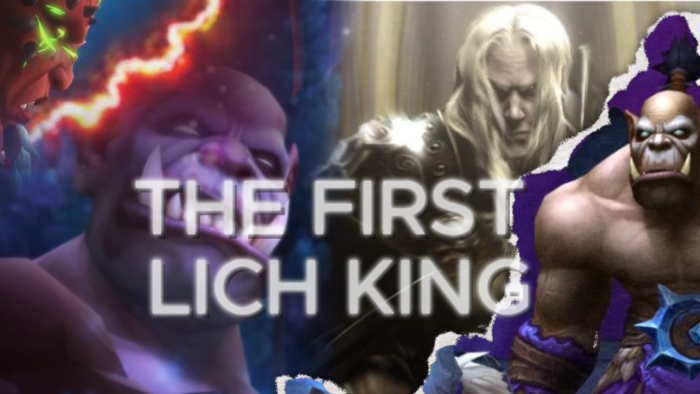
Before he was bound to the Frozen Throne, Ner’zhul was one of the most respected spiritual leaders on Draenor. He was a shaman of the Shadowmoon clan, a figure known for wisdom, restraint, and his close bond with the spirits. In another life, he might have been remembered as a guide who helped hold the orc clans together.
Instead, he became one of the most tragic figures in Warcraft history.
Ner’zhul’s story is not just the tale of the first Lich King. It is the story of how grief, manipulation, and desperation were used to break an entire people. His fall sits at the center of some of the biggest turning points in Warcraft lore: the corruption of the orcs, the rise of Gul’dan, the destruction of Draenor, and the creation of the Scourge itself. Blizzard’s own summaries of the era make that chain clear: Kil’jaeden began by working through Ner’zhul to corrupt the orcs, then turned to Gul’dan when Ner’zhul became unreliable, leading to the Horde’s war against the draenei and, later, Draenor’s ruin.
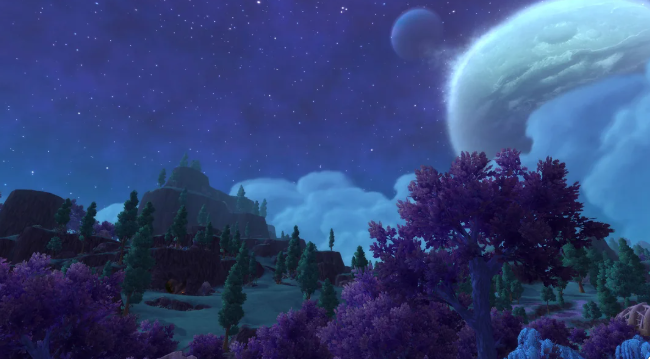
A respected leader in Shadowmoon Valley
Long before demons and death magic entered the picture, Ner’zhul stood near the heart of orc society. He lived in Shadowmoon Valley, a land of dark skies and spiritual importance, and carried a reputation that reached beyond his own clan. Among the orcs, who were often divided by clan loyalty and old rivalries, that kind of respect mattered.
That standing is what made him useful.
Kil’jaeden, one of the Burning Legion’s most powerful leaders, wanted to turn the orcs into a weapon against the draenei. But he did not want mindless slaves at the start. He wanted willing servants, a people who believed they were fighting for survival. To make that happen, he needed someone with authority, someone other clans would trust when the time came to call for unity and war. Ner’zhul was an ideal target, and Blizzard’s official background on the era identifies him as the first major instrument Kil’jaeden used in the Legion’s plan to corrupt the orcs.
What made Ner’zhul vulnerable was not ambition at first. It was pain. He had lost his wife, and that grief never fully left him. In lore accounts of his life, that emotional wound became the opening the Legion needed. A voice he believed belonged to a loved one helped guide him toward disaster, turning personal sorrow into political catastrophe.
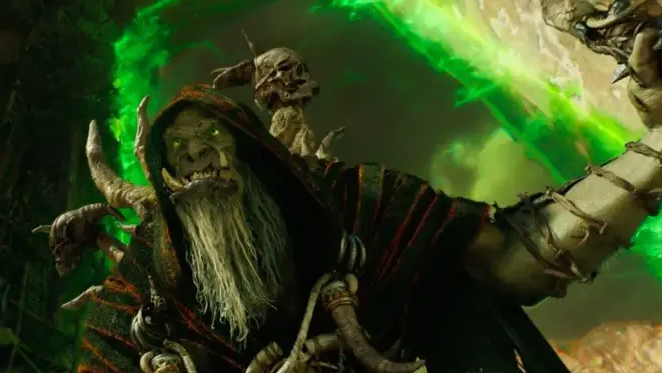
Gul’dan was the perfect weapon
If Ner’zhul was the public face the Legion wanted, Gul’dan was the blade hidden behind it.
Gul’dan came from a completely different place. He was physically weak by orc standards, mocked, rejected, and consumed by bitterness. Where Ner’zhul still had conscience, Gul’dan had resentment. That made him useful in a different way. According to Warcraft lore, Kil’jaeden found in Gul’dan a servant willing to accept fel magic and abandon the old ways without hesitation. He became the first orc warlock and, eventually, the architect of the Horde’s deeper corruption.
This part of the story matters because it shows that the orcs did not fall all at once. Their corruption happened in stages. Ner’zhul gave the Legion access to the clans through trust and influence. Gul’dan gave it teeth. Once fel magic entered the picture, the damage spread through both religion and politics. The orcs were not just being lied to. Their entire spiritual foundation was being poisoned.
That is what makes this period of Warcraft lore so effective. It is not a simple story about evil people making evil choices. It is a story about two very different men being used for different purposes: one broken through grief, the other empowered through hatred.
The spirits fell silent, and the world began to rot
The turning point in the orcs’ downfall came when their connection to the elements began to collapse.
Orc society was built around shamanism. Their culture depended on communion with elemental forces and ancestral spirits. When that relationship broke, it was more than a religious crisis. It was a civilizational one. Lore surrounding Ner’zhul and Gul’dan describes how fel corruption poisoned Draenor and weakened the orcs’ bond with the elements, leaving shamans without answers while famine, sickness, and instability spread across the world.
That silence created the perfect conditions for manipulation. A frightened people will search for meaning, especially when the systems they trusted stop working. The clans saw disease, drought, food shortages, and growing chaos. They needed an explanation. Kil’jaeden, speaking through lies and false visions, gave them one: blame the draenei.
This is one of the strongest parts of Ner’zhul’s story because it shows how believable the lie became. The Legion did not ask the orcs to become monsters overnight. It made them desperate first. It stripped away certainty, cut them off from spiritual guidance, and then handed them an enemy.
That is how the Horde was truly born—not just through war drums and banners, but through engineered fear.
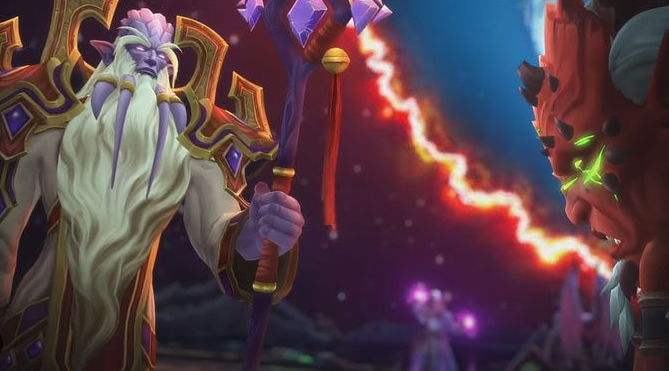
The draenei were turned into the enemy
Once the lie took hold, everything else became easier.
The draenei had long existed beside the orcs, sometimes with tension, but not in the kind of total war the Horde would unleash. Ner’zhul, fed false visions and manipulated through grief, came to believe the draenei were planning the destruction of his people. Gul’dan then helped turn that belief into action, using fear, staged violence, and blood sacrifice to radicalize the clans further. Official Blizzard story material sums up the result plainly: the Horde slaughtered the largely peaceful draenei, and only a small number of survivors remained, including Velen.
That shift is what gives this era of Warcraft so much weight. The orcs were not originally introduced as demons in green skin. They were a spiritual people turned into instruments of genocide through deception. Ner’zhul did not simply wake up one day as a villain. He helped ignite a war because he genuinely believed he was saving his people.
That does not excuse him. It makes him more tragic.
He becomes harder to dismiss because the story is built on moral collapse rather than cartoon evil. By the time he begins to question what is happening, the damage is already everywhere. The clans are united, the war is in motion, and Gul’dan has built enough power to move without him.
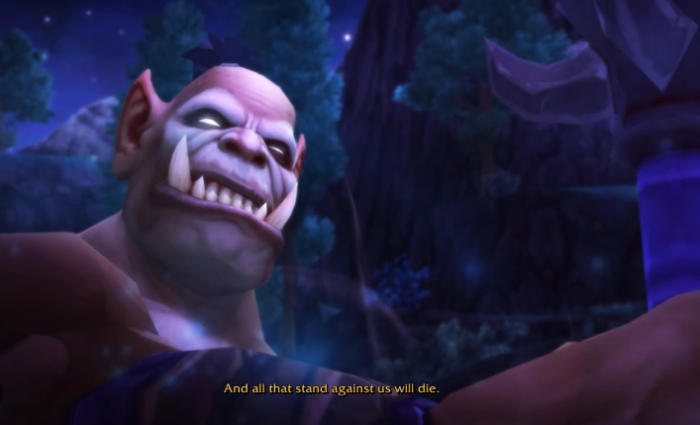
Ner’zhul learns the truth too late
Eventually, Ner’zhul realized he had been deceived.
Warcraft lore records that when he finally communed with the true spirits, he learned the draenei were innocent and that Kil’jaeden had manipulated him from the beginning. That revelation should have been the moment the story turned around. Instead, it was the moment Ner’zhul lost everything. Once Gul’dan and the Shadow Council understood that Ner’zhul was no longer reliable, he was removed from power and effectively replaced.
This is where the story becomes especially brutal. Ner’zhul does not get a clean redemption arc. He does not gather the clans, confess the truth, and undo the damage. He is broken, sidelined, and forced to watch as Gul’dan finishes what the Legion started. That choice makes the story better. Warcraft often hits hardest when characters are allowed to fail completely, and Ner’zhul’s failure is almost total.
He sees the truth. He understands the trap. And yet he is too late to stop it.
That helplessness defines the rest of his story. Even when he tries to resist later, he is never fully in control again.
Draenor falls apart, and Ner’zhul makes one last terrible gamble
After the Horde’s invasion of Azeroth and the wars that followed, Draenor was left dying. Resources were scarce, order was crumbling, and the old future was gone. In that chaos, Ner’zhul returned to power for one last catastrophic act.
As described in Warcraft lore tied to Beyond the Dark Portal, Ner’zhul reopened the Dark Portal and sought powerful artifacts from Azeroth in order to tear open gateways to other worlds. The plan failed in the worst possible way. Draenor was ripped apart, leaving behind the shattered world later known as Outland. Blizzard’s official recap of the old Horde specifically notes that Ner’zhul’s additional portals tore Draenor to pieces.
This is the point where any remaining image of Ner’zhul as merely a victim starts to break. He was manipulated, yes. He was exploited, absolutely. But he also made choices that multiplied the destruction around him. His last major act as an orc leader was not restoration. It was escalation.
That is part of why the character works. He is tragic, but not innocent. Warcraft lets him remain responsible for the ruin he helped create.
The first Lich King is born
Ner’zhul’s final transformation came after the destruction of Draenor.
Captured by Kil’jaeden, he was tortured, stripped of his mortal body, and remade into a spectral being. His spirit was bound to armor, to the runeblade Frostmourne, and to a prison of ice. That was the birth of the Lich King. Warcraft’s official materials and Blizzard’s Warcraft III background both describe this transformation as the moment Ner’zhul ceased to be merely an orc shaman and became the first Lich King, set over the undead Scourge under Legion oversight.
This transformation is one of the smartest pivots in Warcraft lore because it takes a failed manipulator and turns him into a prisoner inside a much larger machine. Ner’zhul is given immense power, but it is power inside a cage. Even as Lich King, he is being watched by dreadlords and used as a weapon.
That tension gives the character a second life. He is no longer just part of the orcs’ story. He becomes central to the future of Azeroth itself.
Arthas did not continue Ner’zhul’s legacy so much as bury it
Ner’zhul’s name is often tied to Arthas because the two ultimately became linked through the mantle of the Lich King. But that connection is more tragic than triumphant.
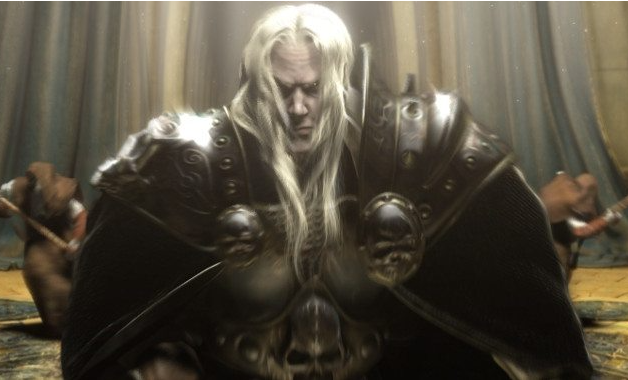
By the end of Warcraft III: The Frozen Throne, Arthas reaches the Frozen Throne and merges with Ner’zhul, becoming the new Lich King. Later Warcraft sources frame this not as a clean partnership, but as the point where Arthas’s will overtook what remained of Ner’zhul’s identity. Warcraft timelines and character histories identify Arthas as the next incarnation of the Lich King after merging with Ner’zhul.
That detail matters because it turns Ner’zhul’s end into one final humiliation. He wanted freedom. He wanted revenge on Kil’jaeden. He wanted, at various points, to save his people, then to control his fate, then simply to survive. In the end, even his greatest transformation did not belong to him. Arthas became the face everyone remembers.
Ner’zhul became the buried foundation underneath it.
Why Ner’zhul remains one of Warcraft’s most tragic characters
Ner’zhul’s story lasts across multiple eras of Warcraft because it connects so many of the franchise’s biggest disasters. He is there at the fall of the orcs, at the rise of Gul’dan, at the shattering of Draenor, at the birth of the Lich King, and at the beginning of the Scourge’s long shadow over Azeroth.
But what makes him memorable is not just scale. It is the shape of the tragedy.
He begins as a spiritual leader and ends as a tool used by powers far beyond him. He is manipulated because of grief, discarded when he becomes inconvenient, and transformed into a monster whose legacy is eventually absorbed by someone else. His life is one long collapse from wisdom into ruin.
That is why Ner’zhul still works as a Warcraft character. Not because he was the strongest. Not because he was the most iconic. But because few figures in the setting embody the cost of corruption as completely as he does.
He did not start as the first Lich King.
He started as an orc who thought he was listening to the right voice.