
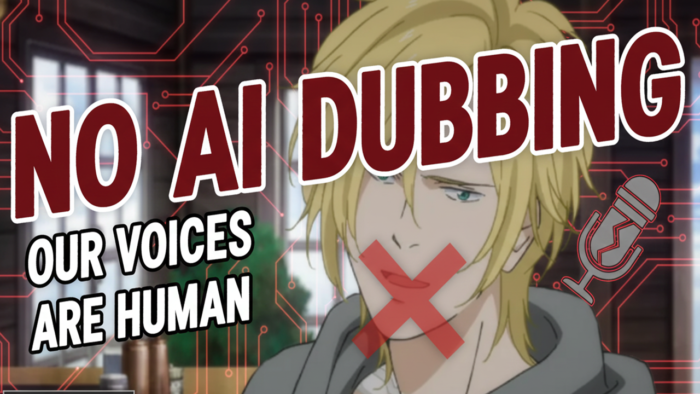
Amazon Prime Video recently found itself at the center of an unexpected controversy after quietly adding AI-generated English dubs to several well-known anime titles. The update appeared without announcement, explanation, or promotional material. Instead, viewers simply noticed that their favorite characters suddenly sounded different—flatter, less expressive, and unmistakably artificial. The affected titles included Banana Fish, Pet, and No Game, No Life Zero, all of which carried a subtle but impactful label: “English [AI Beta].”
For a brief moment, confusion spread faster than the episodes themselves. Fans began posting clips across social media, comparing the new voices to monotone GPS directions or unfinished text-to-speech experiments. Even casual viewers, and younger fans who normally don’t follow production details, immediately sensed that something had changed. In a medium where emotional performance plays a defining role, this shift was impossible to ignore.

Studios Were Not Informed or Involved
The situation escalated further when the studios behind these anime discovered what had happened—at the same time viewers did. Companies including Kadokawa and Sentai Filmworks/HIDIVE released statements clarifying that they had not authorized any AI-generated dubbing on their titles. They emphasized that the dubs were created and uploaded without their knowledge or approval, a revelation that transformed a confusing moment into a serious industry concern.
Why Voice Acting Matters in Anime
Voice acting is considered a vital creative element in anime. Performances are carefully directed to match the tone, emotion, and intention of each scene. Replacing those actors with AI not only removes the human craft behind the dialogue, but it also raises uncomfortable questions about permission, copyright, and artistic integrity. Many within the anime community viewed Amazon’s silent rollout as both disrespectful to performers and dismissive of long-standing production standards.
Fan Backlash Forced a Quick Reversal
The backlash was swift, and Amazon ultimately removed the AI tracks on December 1. The original dubs and subtitles were restored, and the platform did not provide additional public explanation beyond quietly reversing the decision. While the incident was brief, its impact lingered, prompting discussions that extend far beyond the shows involved.
Concerns Moving Forward: Ethics, Transparency, and Technology
The controversy surrounding Amazon’s AI dubs highlights several pressing issues. There are concerns about how AI might displace human talent, particularly in voice acting, where performance is inseparable from character identity. There are also legal and ethical questions: How should studios protect actors’ voices when technology can mimic them? What responsibilities do streaming companies have when experimenting with new technologies that directly alter creative content? And perhaps most importantly, how transparent should platforms be when making changes that affect the viewing experience?
Despite the concerns raised, the incident does not signal the end of AI’s involvement in entertainment. Instead, it serves as a reminder that the introduction of new technology must be handled with communication, consent, and respect for the creative process. AI may eventually assist in areas like translation, accessibility, or production efficiency, but replacing human voice actors—especially without authorization—crosses a line most fans are unwilling to ignore.
In the end, the message from the anime community was clear. Audiences want innovation, but not at the cost of authenticity. Studios expect collaboration, not surprises. And when it comes to the characters fans have connected with for years, robotic dialogue is no substitute for the emotion and nuance that human actors bring to life. Amazon’s attempt at AI dubbing may have lasted only a short time, but the conversation it sparked will shape how the industry approaches artificial intelligence for years to come.
If AI has a place in anime, it must be one built on transparency, ethics, and respect for the people who give these stories their voice—literally and figuratively. For now, at least, human performances remain not just preferred, but essential to what makes anime resonate so deeply with its audience.