The Light as We Think It Works
For most of World of Warcraft’s history, the Light has been treated as the safest force in the universe, a power tied to healing, protection, and justice, something players instinctively associate with being “good.” It restores the wounded, shields the vulnerable, and stands at the center of nearly every major religious system in Azeroth, which naturally leads to the assumption that the Light represents morality itself. But once you begin to examine how it actually behaves across the lore, that assumption starts to fall apart, because the Light does not consistently reward good actions, nor does it reject harmful ones, and that contradiction forces a deeper question: is the Light truly good, or have we simply misunderstood what it is?
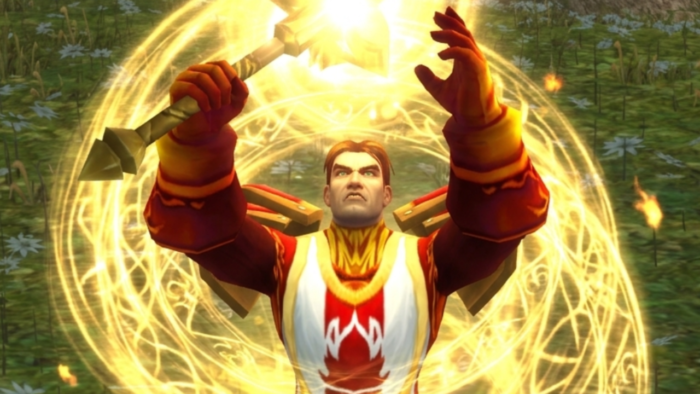
To answer that, you have to start with where the Light appears to be at its best, because there are undeniable moments where it embodies everything people believe it should be. During the Third War and beyond, figures like Uther the Lightbringer and Tirion Fordring use the Light not just as a weapon, but as a stabilizing force, holding together armies and giving people something to believe in when everything else is collapsing, and in those moments the Light feels less like a tool and more like a presence tied to hope itself. It heals the wounded, cleanses corruption, and protects against forces like undeath and demonic influence, acting almost like a natural counterbalance to the most destructive powers in the setting, and when viewed through this lens, it is easy to conclude that the Light is fundamentally benevolent, especially when entire cultures like the Draenei build their identity around it, guided by beings such as the Naaru, who appear to embody its purest form.
The First Crack: When the Light Supports the Wrong People
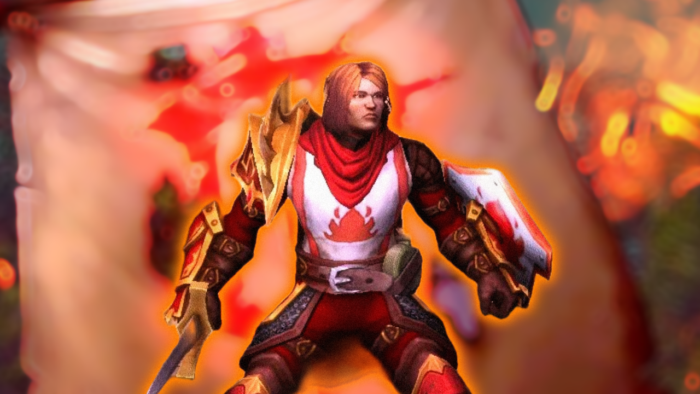
But that conclusion only holds if the Light behaves consistently, and the moment you examine cases where it doesn’t, the entire framework begins to shift, because the Light does not withdraw from those who misuse it. The most immediate and undeniable example is the Scarlet Crusade, a group defined not by justice, but by paranoia and extremism, carrying out purges, executions, and mass violence under the belief that they are cleansing the world of corruption, and despite their actions being objectively destructive, the Light continues to answer them without hesitation. This is where the first major contradiction appears, because if the Light were truly a moral force, it would reject them, yet it does the opposite, empowering them fully, which suggests that morality is not the condition required to wield it.
From Guidance to Control
Once that pattern is established, it becomes impossible to ignore, and it escalates further when looking at larger, more structured uses of the Light as a means of control. The transformation of Yrel and the rise of the Lightbound present a scenario where the Light is no longer just being used defensively or reactively, but is actively shaping societies, enforcing conversion, and eliminating opposition under the belief that a unified world under the Light is inherently correct, and while this is framed by its users as salvation, the outcome is indistinguishable from domination. What makes this example particularly important is not just the scale, but the consistency, because once again, the Light does not resist this use, it reinforces it, suggesting that it does not distinguish between guidance and control, only between belief and doubt.
A Force That Heals and Hurts Without Judgement
This lack of distinction becomes even more apparent when examining how the Light interacts with different forms of life, particularly the undead, because while it heals the living, it causes intense pain to those sustained by unnatural forces, not as punishment, but as a consequence of what it is attempting to do. The Light seeks to restore what it perceives as a correct state of existence, and when that state does not align with the target, the result is destructive rather than restorative, which means that the same force capable of saving one individual can simultaneously torture another without any shift in intent. This is not the behavior of a moral system making decisions; it is the behavior of a force applying a fixed rule regardless of context.

Even the “Pure” Light Isn’t Simple
Even the Naaru, often interpreted as the purest representation of the Light, reinforce this idea rather than contradict it, because while they guide and support civilizations, they operate within a rigid philosophical structure that prioritizes a single path forward, and more importantly, they themselves are not static embodiments of goodness, but exist within a cycle that includes transformation into the Void, demonstrating that the Light is not separate from darker forces, but part of a larger system where opposing states coexist and transition between one another. This further weakens the idea that the Light is inherently good, because it shows that even its most “perfect” forms are bound to processes that extend beyond simple morality.
The Real Answer: The Light Rewards Belief, Not Morality
At this point, the evidence stops pointing toward a moral alignment and instead begins to form a consistent definition, because across every example, the Light behaves the same way: it heals, but it also burns; it protects, but it also enforces; it uplifts heroes, but it equally empowers zealots, and the only common factor between those outcomes is not intent, but certainty. The Light does not appear to evaluate whether something is right or wrong, but instead responds to the strength of belief behind it, amplifying conviction and allowing it to manifest as reality-altering power.
That leads to the actual conclusion, which is far less comfortable than the original assumption, because the Light does not sit on the side of good or evil, nor does it balance between them in a traditional sense, but instead exists entirely outside that framework. It is a force of absolute certainty, one that rewards belief without questioning it, strengthens resolve without guiding it, and pushes reality toward a singular, defined outcome based on the will of the user. This is why a noble paladin and a fanatic crusader can draw from the same source without limitation, and why the Light can just as easily be used to save the world as it can to reshape it by force.
So when asking whether the Light is good, bad, or somewhere in between, the answer is that it is none of those things in the way we understand them, because it does not operate on morality at all. Instead, it operates on a single principle that explains every contradiction surrounding it: if you truly believe something is right, the Light will make it possible, and it will never stop to ask if you’re wrong.