For thousands of years, humans and high elves stood side by side. They fought the same wars, faced the same enemies, and at times relied on each other for survival. From the Troll Wars to the rise of the Horde and the devastation of the Scourge, their histories are deeply intertwined. Yet by the time of early World of Warcraft, these two races—once bound by alliance—found themselves divided, mistrustful, and often on opposite sides of conflict.
Understanding how that happened requires going back much further than the Alliance itself, to a time before humans and high elves ever met.
The story begins with the ancient Kaldorei empire. Thousands of years ago, night elves lived in a golden age centered around the Well of Eternity, a powerful source of arcane energy. Over time, a privileged class known as the Highborne emerged. They held authority within the empire and had unrestricted access to the Well, allowing them to study and refine arcane magic to a degree no others could match. What began as curiosity slowly turned into mastery, and eventually dependence.
That dependence came with consequences. The Highborne’s use of arcane magic drew the attention of the Burning Legion, culminating in Queen Azshara’s pact with the demons. In exchange for power, she aided in opening a portal to Azeroth, triggering the War of the Ancients. The conflict devastated the world, leading to massive loss of life and the near destruction of the elven civilization.
Although the night elves ultimately repelled the Legion, the cause of the disaster was clear in their eyes: arcane magic. Its use was outlawed, and the Highborne—many of whom refused to abandon their practices—were exiled rather than executed. Stripped of their homeland, they sailed across the sea and eventually settled in the northern reaches of the Eastern Kingdoms, founding the kingdom of Quel’Thalas and creating the Sunwell as a new source of power.
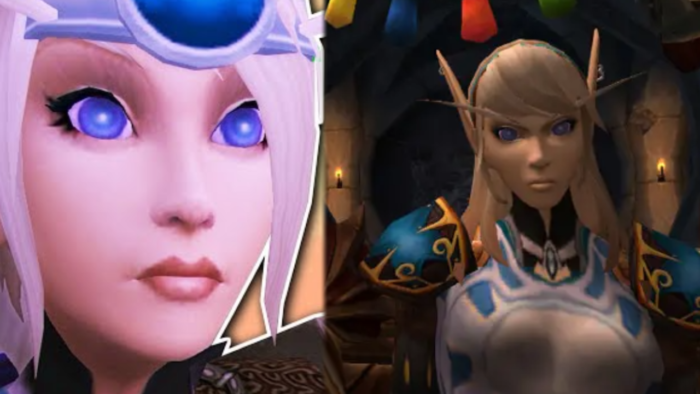
Over generations, these exiles evolved into what would become known as the high elves.
Their early relationship with humans was distant but not hostile. That changed when the high elves came into conflict with the forest trolls, whose lands they had occupied. Despite their mastery of magic, the elves were outnumbered and began to lose ground. In desperation, they sought aid from the human kingdom of Arathor. The resulting alliance marked a turning point. Humans provided military strength, while the elves taught a select group of humans the use of magic, leading to the founding of Dalaran.
Together, they defeated the trolls, and for a time, the bond between humans and high elves was strong. Diplomatic ties were established, trade flourished, and the two societies began to influence one another in meaningful ways.
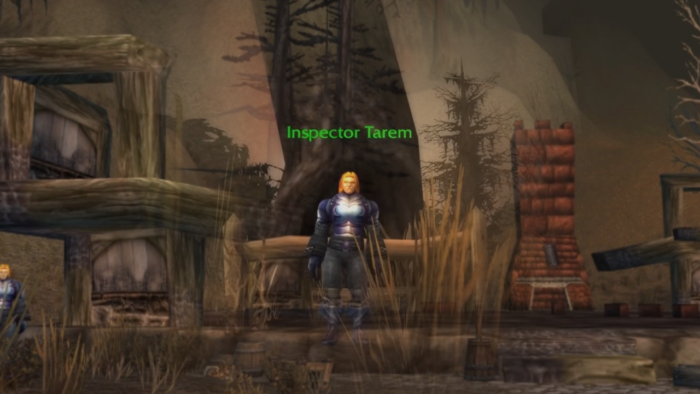
However, this unity was not permanent.
The collapse of Arathor fractured the human kingdoms into smaller, competing states. With no central authority to maintain the original alliance, political priorities shifted. Humans, with their relatively short lifespans, saw generations rise and fall quickly, while elven leadership remained largely unchanged for centuries. Over time, the shared sense of obligation faded. Rivalries emerged, and both sides grew more cautious in their dealings with one another.
This growing distance became clear during the Orcish Wars. When the Horde invaded Azeroth, the high elves initially underestimated the threat. During the Second War, they chose limited involvement, sending only a small contingent of rangers to assist the Alliance. Their reliance on magical defenses and underestimation of the Horde’s scale proved costly. Only when Quel’Thalas itself came under direct threat did they fully commit to the war effort.
Although the Alliance ultimately prevailed, the aftermath left lingering resentment. The high elves felt that the Alliance had failed to adequately defend their lands, particularly when forces were withdrawn to pursue retreating orcs, leaving Quel’Thalas vulnerable to further attacks from trolls. Viewing this as a betrayal, and unwilling to shoulder the financial burdens imposed by the Alliance, the high elves withdrew from the coalition.
By the time of the Third War, relations were strained but not entirely severed. That fragile connection collapsed when the Scourge invaded Quel’Thalas. The devastation was nearly total. Silvermoon fell, the Sunwell was destroyed, and the majority of the high elf population was wiped out. King Anasterian was killed, and the kingdom itself was left in ruins.
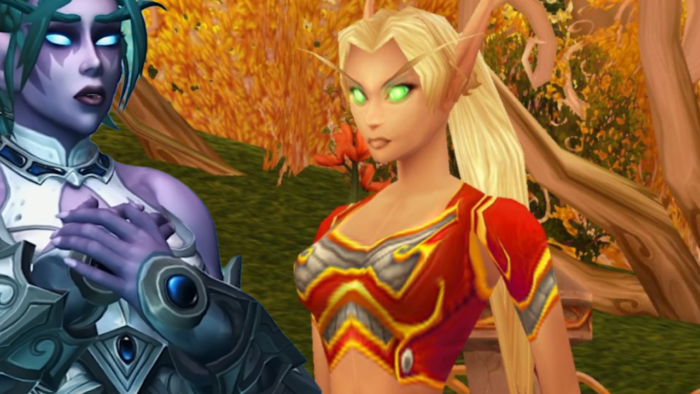
In the aftermath, surviving elves aligned with remnants of the Alliance, but under the command of Lord Garithos—a leader openly hostile toward them. His resentment, rooted in past grievances, led him to assign elven forces to dangerous and often suicidal missions. When they refused, he declared them traitors and ordered their execution.
This moment marked a definitive break.
Freed with the help of the naga, many elves followed Prince Kael’thas into exile and eventually allied with Illidan Stormrage. There, they learned new methods of sustaining themselves after the loss of the Sunwell. From this point forward, the elven people split into two distinct groups. Those who followed Kael’thas became known as blood elves, while those who remained loyal to the Alliance retained the name high elves.
As Quel’Thalas struggled to rebuild, new threats emerged. The Scourge still lingered, troll incursions continued, and many elves suffered from arcane withdrawal, leading to dangerous transformations. Desperate for stability, the blood elves sought allies.
The Alliance refused to accept them, citing past betrayals and concerns over their reliance on magic. The Horde, however, had changed since the days of the Orcish Wars. Under new leadership and with the influence of Sylvanas Windrunner, the blood elves found a place within its ranks.
From that moment, the divide became permanent. High elves and blood elves stood on opposing sides of a larger conflict, each shaped by the same history but moving in different directions.
Even so, their shared past never fully disappeared. There have been moments of cooperation, even mutual aid, particularly in times of greater threats. In neutral cities like Dalaran, both groups coexist uneasily, represented by opposing factions that reflect their continued division.
The story of humans and high elves is not one of a single betrayal or a single war. It is a gradual unraveling shaped by time, shifting priorities, and the consequences of decisions made across generations. Despite fighting side by side against some of Azeroth’s greatest threats, they were never able to maintain a lasting unity.
And that is what makes their history so compelling. It is not defined by a clear turning point, but by a slow and inevitable drift apart—one that transformed allies into something far more complicated.