
For years, the idea of revamping Azeroth felt like something players wanted but Blizzard kept at arm’s length. The common response was that rebuilding the original world would be technically difficult, disruptive to nostalgia, and hard to justify when new continents could be added instead. Recently, that tone has changed. Developers are no longer talking about why a revamp would be hard — they are talking about why returning to old locations excites them and what stories could be told there. That shift signals more than curiosity; it suggests a new design philosophy.
Players have wanted a world overhaul for a long time, and not just for graphical upgrades. Many starting zones still reflect early-2000s design limitations. Capital cities feel small compared to modern hubs. Entire regions remain frozen in the moment they were last updated, even though the story has moved forward. What players want is a world that reflects time passing — rebuilt cities, evolving landscapes, and spaces that feel alive rather than preserved.
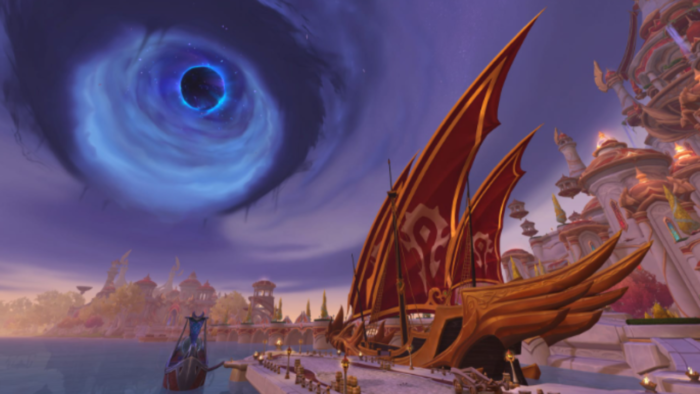
Silvermoon’s recent reconstruction showed what that can look like. Built with modern tools and lighting, the city finally matches its lore scale and atmosphere. More importantly, it proved that older spaces can be rebuilt without losing their identity. That success appears to have boosted developer confidence. In interviews, team members have pointed to strong player reception and the internal excitement that comes from revisiting iconic locations.
Associate game director Paul Cubitt has spoken about the appeal of returning to places that players already care about. Locations like Wyrmrest Temple, long central to the story but rarely revisited in meaningful ways, offer narrative opportunities that new zones cannot replicate. He has also mentioned areas such as Durotar, Stonetalon Mountains, and early starting zones as places worth revisiting. The interest is not rooted in nostalgia alone; it comes from the realization that familiar locations allow the story to move forward while staying grounded in the world’s history.
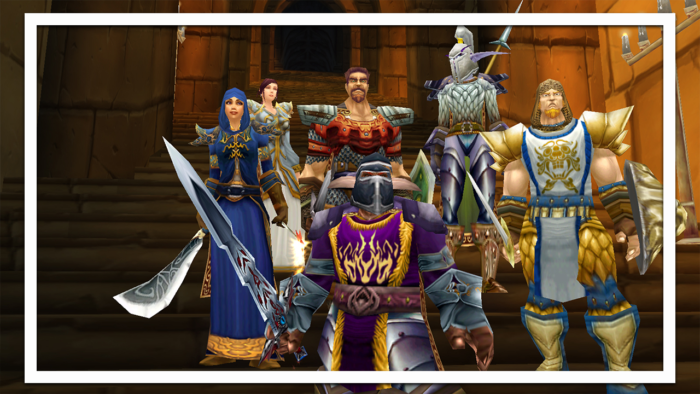
Rebuilding these spaces is not a simple visual upgrade. Many early zones relied on technical shortcuts. Some areas were never built to support flying mounts, modern lighting, or today’s environmental detail standards. Reworking a zone like Silvermoon required reconstructing it to function within modern gameplay systems. That process demonstrated that revamps are less about polishing the past and more about rebuilding it to support current design.
Ion Hazzikostas has addressed world revamps in interviews for years, often emphasizing the difficulty of changing nostalgic spaces. Over time, his language has evolved. He has acknowledged that unused iconic locations limit storytelling and that a living world must be able to revisit its past. More recently, he has framed returning to familiar places as essential rather than optional. His comments about maintaining visual continuity — avoiding situations where players move a short distance and encounter assets from vastly different eras — highlight the importance of cohesion in an evolving world.
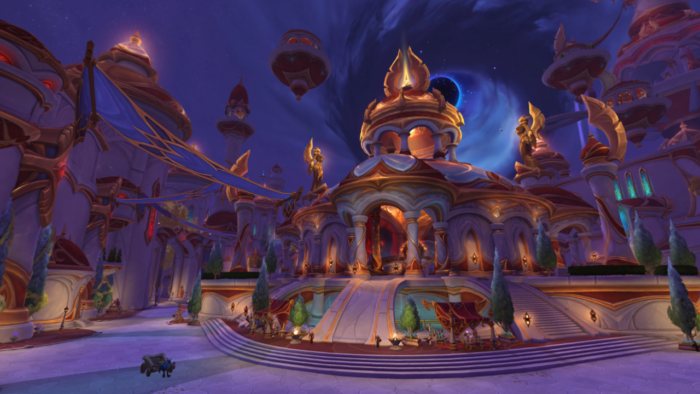
Rather than a single massive overhaul, the direction Blizzard appears to be exploring is gradual renewal. Rebuilt zones, updated art pipelines, and renewed narrative focus suggest a scalable approach. Instead of replacing the entire world at once, regions could be modernized over time, each update supporting new stories while bringing older areas up to current standards.
The timing makes sense. The World Soul Saga signals long-term narrative planning, and recent features such as player housing show Blizzard addressing long-standing community requests. Technically, revamping zones is resource-intensive, but it scales well within a large studio. Modern tools and workflows reduce the risks that once made revamps impractical.
More importantly, the philosophical barrier has shifted. The question is no longer whether Azeroth should change, but how to let it evolve without losing what made it meaningful in the first place. A persistent world cannot remain frozen in its most nostalgic state. It has to grow, reflect its history, and create room for new stories.
If current efforts continue, Azeroth may not receive a single dramatic overhaul. Instead, it may gradually become a world that evolves alongside its players — familiar, but never static.