Exploring the Post-Apocalyptic Theory Behind The Legend of Korra
One of the most intriguing fan interpretations of the Avatar universe suggests that the world seen in Avatar: The Last Airbender and The Legend of Korra is not simply ancient — it is rebuilt. Often called the post-apocalyptic theory, this idea attempts to explain the hybrid wildlife, the long stagnation of technology, and the sudden modernization that occurs during Korra’s lifetime.
A World Without Normal Animals
The first detail that fuels the theory is the ecosystem itself. In the Avatar world, ordinary animals are rare. Aside from Bosco — the Earth King’s unusually normal bear — most creatures are hybrids: platypus bears, turtle-ducks, spiderflies, eel hounds, and polar bear dogs. The shows treat these species as natural rather than unusual.
The canon-friendly explanation is spiritual influence. Nature and the Spirit World coexist closely, and many animals reflect symbolic or spiritual traits tied to bending and balance. The post-apocalyptic theory proposes a different origin: that hybrid species evolved to survive environmental collapse and a radically altered ecosystem. If the physical and spiritual worlds overlapped during a catastrophic period, new adaptive species could have emerged.
Wan’s Era and a Fragmented Humanity
In Korra’s Book Two, Avatar Wan’s time presents a fractured world. Humans live atop lion turtles for protection while the wilds are dominated by spirits. Rather than representing the dawn of civilization, some fans interpret this setting as a rebuilding phase after societal collapse. Human communities are scattered, vulnerable, and disconnected, suggesting survival rather than expansion.
Under this interpretation, humanity retreated to safe zones as the wilderness became hostile. Over generations, knowledge could have been lost as populations shrank and specialists died. Complex technologies disappear easily when the systems that support them vanish.
Ten Thousand Years of Stagnation
From Wan to Aang, roughly ten millennia pass, yet technology remains largely pre-industrial. Cities, architecture, and infrastructure evolve slowly, and societies retain monarchies, feudal structures, and traditional craftsmanship.
If the world were rebuilding from collapse, this stagnation makes sense. Progress requires stability, population density, trade networks, and preserved knowledge. Without these, societies prioritize survival and continuity rather than innovation.
Bending also reduces technological necessity. Earthbenders shape structures, waterbenders heal and transport, firebenders provide energy, and airbenders travel with ease. In a world where human abilities solve practical problems, technological urgency diminishes.
Wan’s Balance and the Path to Recovery
Wan’s separation of the Spirit and physical worlds restored stability between realms. From a theoretical standpoint, this act could have reduced environmental chaos and allowed human societies to stabilize. Recovery would not have been immediate; rebuilding civilization is measured in centuries, not decades. Over time, trade resumed, cultures expanded, and knowledge accumulated once more.
By Aang’s era, the world appears stable but traditional. By Korra’s era, however, change accelerates dramatically.
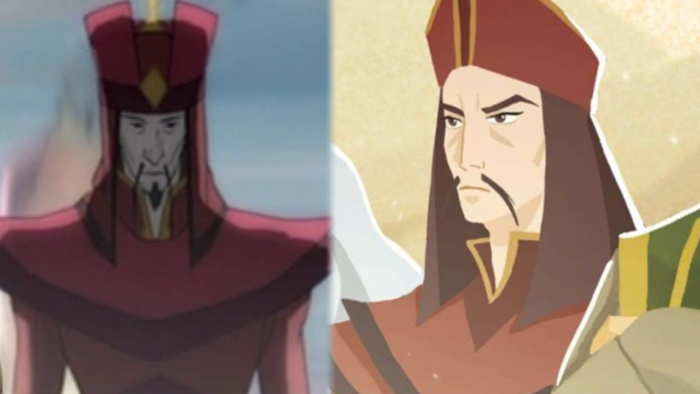
Korra’s Era: Progress Resuming, Not Beginning
In the seventy years between Aang’s victory and Korra’s arrival, the world experiences rapid modernization. Republic City becomes an industrial hub with electricity, automobiles, radio broadcasting, aviation, and advanced metallurgy. The pace mirrors a compressed industrial revolution.
Rather than the start of progress, the theory frames this surge as the resumption of progress. Peace among nations, increased cultural exchange, and economic cooperation create conditions for innovation. Technology flourishes when societies feel secure enough to invest in the future.
A Cycle of Collapse, Balance, and Renewal
Some fans extend the theory further. They suggest humanity survived early collapse because lion turtles sheltered human populations. Wan restored balance and allowed recovery. Korra later reopened the spirit portals, reuniting the two realms and altering the balance Wan created. From this perspective, the Avatar world may move through repeating cycles: collapse, restoration, growth, and transformation.
This cyclical interpretation aligns with the Avatar universe’s central theme: balance is not permanent. Each era must rediscover it.
Why the Theory Resonates
While there is no canon evidence of a lost advanced civilization, the post-apocalyptic theory resonates because it connects multiple unexplained elements: hybrid wildlife, Wan’s fragmented world, technological stagnation, and Korra’s rapid modernization. It reframes the Avatar setting as a world shaped by disruption and recovery rather than steady progress.
More importantly, it reinforces the franchise’s core idea: balance is not guaranteed. It is rebuilt, protected, and sometimes rediscovered after periods of chaos.
Whether taken as speculation or metaphor, the theory encourages viewers to see the Avatar world not as static fantasy, but as a living civilization shaped by cycles of destruction, healing, and renewal — a theme that feels timeless and unmistakably Avatar.