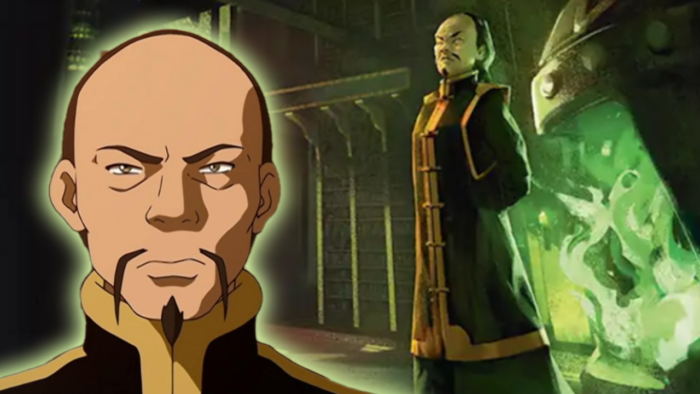
Long Feng stands as one of the most politically complex antagonists in Avatar: The Last Airbender. Unlike villains who rely on military strength or open aggression, his influence is built on information control, institutional power, and the careful management of public perception. His role in Ba Sing Se highlights how political authority can become dangerous when accountability disappears.
Political Authority and the Consolidation of Power
As Grand Secretariat of Ba Sing Se and leader of the Dai Li, Long Feng operates as the true power behind the Earth Kingdom’s capital. While the Earth King remains the official ruler, Long Feng controls access to information, directs state decisions, and shapes policy from the background.
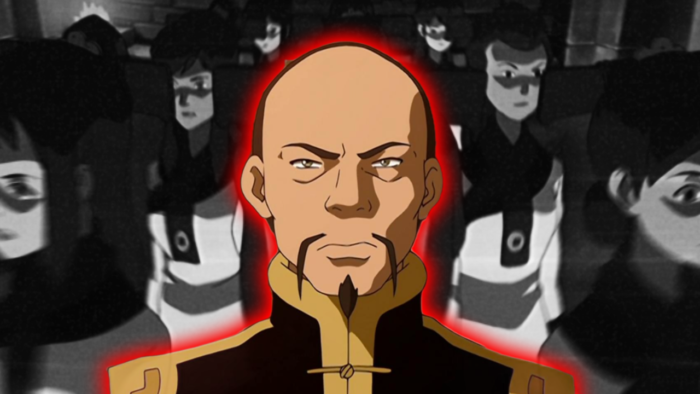
The Dai Li, originally created to preserve cultural heritage, are transformed under his leadership into an organization focused on surveillance and enforcement. Through them, Long Feng maintains order and ensures that opposition never gains momentum. His authority relies less on personal strength and more on structural control.
The Manufactured Stability of Ba Sing Se
Long Feng’s defining policy is the suppression of news regarding the Hundred Year War. Public discussion of the conflict is prohibited, creating the image of a peaceful and unaffected city.
On the surface, this approach appears to protect citizens from fear and chaos. In reality, it isolates the population from truth and prevents meaningful political response. Stability becomes a performance rather than a genuine condition, sustained through censorship and intimidation rather than trust.
This environment allows Long Feng to position himself as the guardian of order while keeping both the public and the Earth King dependent on his guidance.

A Bureaucratic Form of Villainy
What makes Long Feng effective as a character is the realism of his methods. He does not seek domination through force; instead, he manipulates institutions and procedures to maintain influence. His calm demeanor and calculated decision-making contrast sharply with the more aggressive antagonists in the series.
By relying on systems instead of spectacle, Long Feng represents a form of power that feels grounded and recognizable. His actions demonstrate how authority can be used to limit freedom while still appearing legitimate.
Collapse of Political Control
Long Feng’s position begins to unravel once Team Avatar exposes the truth of the war directly to the Earth King. With the illusion broken, his authority rapidly declines. The system he built depends on secrecy, and once transparency enters the equation, it cannot sustain itself.
Attempting to recover his influence, Long Feng seeks an alliance with Princess Azula, believing he can use her ambitions to regain control of the Dai Li. Instead, Azula quickly turns the organization against him, demonstrating that political manipulation is only effective until someone more decisive takes advantage of the same tools.
Thematic Significance
Long Feng’s arc reflects one of the central political themes of the series: stability without honesty is fragile. His rule demonstrates how institutions designed to protect society can become instruments of control when oversight disappears.
He is not portrayed as chaotic or irrational. Rather, his danger comes from believing that truth is less important than order. This perspective ultimately undermines the very stability he tries to preserve.
Legacy Within the Narrative
Long Feng remains a memorable figure because he represents a different kind of threat. He shows that power does not always come from armies or bending ability; it can also emerge through bureaucracy, censorship, and quiet influence.
His story adds political depth to the world of Avatar by exploring how governments can fail from within. In the end, Long Feng’s downfall serves as a reminder that systems built on secrecy are vulnerable once reality is allowed to surface.