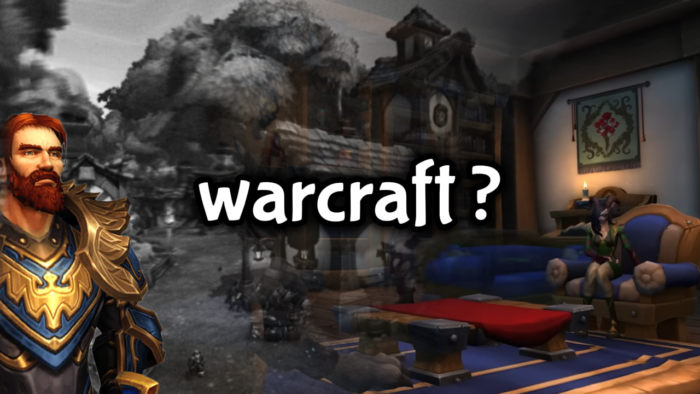
In the past few days, discussion across the Warcraft community has centered on Blizzard’s newly released housing cinematic. What could have been a routine feature reveal quickly turned into something broader: a renewed debate over whether Warcraft still feels like Warcraft.
The argument itself is not new. For years, players have questioned whether the tone of the franchise has shifted too far from its roots. The housing cinematic simply brought that conversation back into focus.
On one side are players who argue that the game feels too bright, too safe, and too whimsical compared to the darker fantasy tone that defined earlier entries. On the other are those who see the reaction as exaggerated, or who simply do not view tonal evolution as a problem.
The disagreement is less about housing as a feature and more about identity.
The Tone Has Changed — But Not Completely
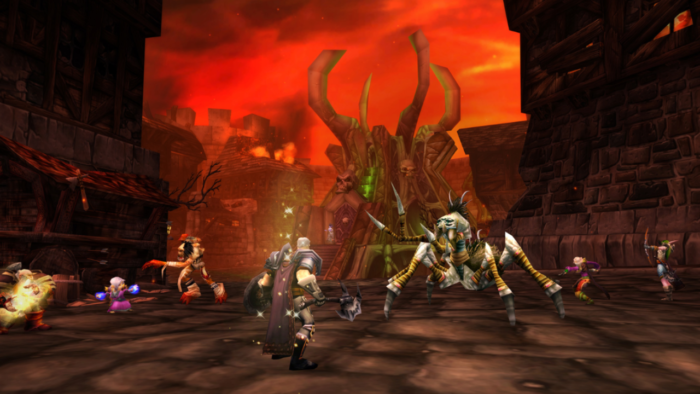
It is difficult to deny that Warcraft’s tone has evolved. Early entries like Warcraft II and Warcraft III leaned heavily into grim medieval fantasy, with themes of corruption, war, betrayal, and moral ambiguity. Even early World of Warcraft zones carried a rougher aesthetic. The world felt dangerous and politically unstable.
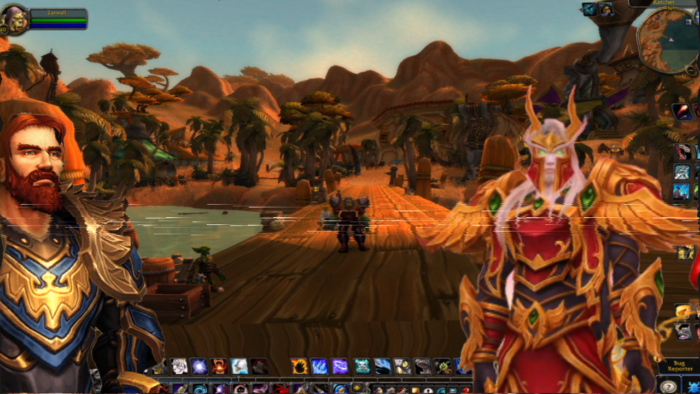
Modern WoW is more vibrant. Zones are more colorful. Character designs are smoother and more expressive. Story arcs frequently lean into cosmic threats rather than grounded faction conflict. That does not mean darker themes are gone. Expansions such as Shadowlands and Dragonflight still deal with death, existential forces, and large-scale catastrophe. The difference is in the ratio. The lighter moments are more prominent, and the presentation feels less gritty overall.
Whether that shift is positive or negative depends largely on personal preference.
A Franchise That Reinvents Itself Constantly
Few long-running franchises change tone as frequently as World of Warcraft. Moving from one expansion to another can feel like stepping into a different genre. Even traveling between zones within the same expansion can produce sharp thematic shifts.
Some players view that flexibility as a strength. Others see it as inconsistency.
The core issue is that Warcraft was built on faction conflict. The Horde and Alliance were designed as opposing forces with ideological and cultural differences. Over time, repeated world-ending threats have forced cooperation. Cosmic villains have replaced faction war as the central narrative engine.
From a storytelling standpoint, that evolution makes sense. After so many catastrophic events, returning to constant open war without a strong catalyst would feel artificial. At the same time, reducing faction tension removes a defining pillar of the franchise.
PvP servers once felt like an extension of the lore. Today, open conflict can feel disconnected from the narrative, because the story emphasizes unity against external threats rather than internal rivalry.
Originality Versus Foundation
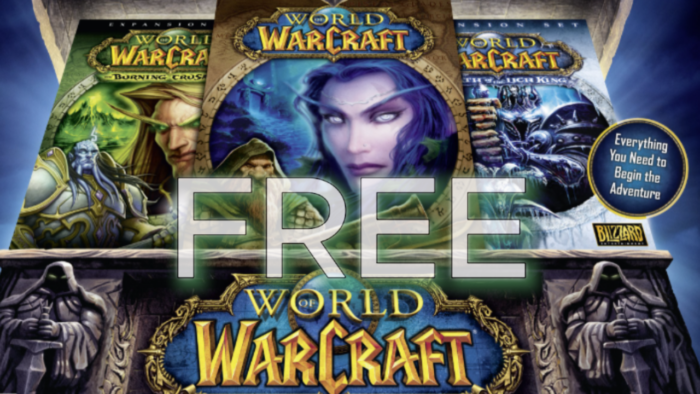
Another layer of the debate concerns originality. Early Warcraft drew heavy inspiration from Warhammer Fantasy. Blizzard originally sought to develop a Warhammer game before creating its own universe. The Orcs versus Humans premise, the aesthetic influences, and even certain thematic structures were closely aligned.
Modern Warcraft is more distinct from those roots. Its cosmic lore, Titan mythology, and metaphysical forces of Light and Void are far removed from traditional high fantasy templates. In that sense, the franchise is more original than it was in the 1990s.
Originality, however, does not automatically equal cohesion. Familiar fantasy archetypes endure because they are structurally reliable. The question is not whether Warcraft should move beyond its inspirations, but whether its newer direction feels anchored to a clear thematic core.
The Problem of Direction
The strongest criticism from long-time players is not that Warcraft is lighter or more colorful. It is that the narrative feels directionless. The stakes escalate continuously, yet the thematic through line is harder to identify.
Conflict remains central in name, but the factions themselves feel increasingly homogenized. Racial distinctions matter less in gameplay. Cross-faction grouping is common. Narrative hostility is often undercut by cooperation in the next patch cycle.
This creates tonal friction. The world is built on rivalry, yet the story frequently discourages it.
Reversing that trend is not simple. After years of shared crises, forcing the Horde and Alliance back into full-scale war would require a believable new catalyst. Without it, a return to old dynamics would feel contrived.
Can Warcraft Reconnect With Its Roots?
There are ways to reintroduce tension without undoing existing lore. One possibility would be to explore ideological divisions more deeply rather than relying on external cosmic threats. Light versus Void, zealotry versus pragmatism, tradition versus reform — these are conflicts that can exist within and across factions.
A more morally ambiguous portrayal of the Alliance, for example, could rebalance perception without discarding established history. Warcraft has touched on such themes before through groups like the Scarlet Crusade, but it has rarely allowed the main factions themselves to embody sustained ideological extremes.
Another approach would be structural change. If factions are increasingly cosmetic, the game could eventually shift toward new ideological alignments rather than race-based blocs. That would represent a major departure, but it might align more closely with the current narrative trajectory.
Whether Blizzard chooses to pursue that kind of transformation remains uncertain.
So, Has Warcraft Become Too Soft?
If the question is framed narrowly around one cinematic, the answer is likely no. A housing feature does not redefine a franchise.
If the question is about long-term tonal drift, then the answer is more complicated. Warcraft today is less grim and less faction-driven than it once was. It is also broader in scope and more experimental in theme.
For some players, that evolution represents growth. For others, it feels like a loss of focus.
What is clear is that the debate is not simply nostalgia versus progress. It is about coherence. Long-running worlds survive when they evolve without losing the structural ideas that made them compelling in the first place.
Whether modern Warcraft has struck that balance is still an open question.