
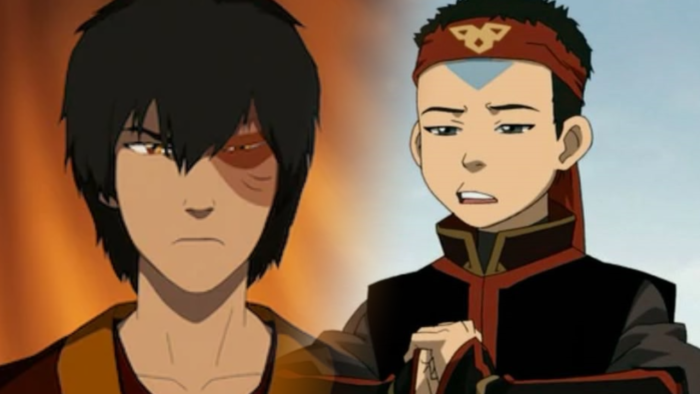
When the world of Avatar: The Last Airbender begins, the Fire Nation stands as a global superpower. It has warships, colonies, military dominance, and a population that largely believes its cause is just. What makes this so disturbing is that this confidence did not grow naturally. It was constructed.
Before the Hundred Year War could continue for generations, the Fire Nation government had to convince its own people that the war was righteous. That process began with the most devastating act of the conflict: the extermination of the Air Nomads.
The attack was not only a military strike. It was followed by a carefully shaped narrative that turned genocide into national defense.
The Air Nomad Genocide and the Problem of Justification
Fire Lord Sozin launched coordinated attacks on all four Air Temples at the beginning of the Hundred Year War. His strategic objective was clear. The next Avatar would be born among the Air Nomads. Eliminating them meant eliminating the Avatar before he could threaten Fire Nation expansion.
The Air Nomads, however, were known as pacifists. They had no formal military and lived spiritually focused lives detached from world politics. This created a problem for the Fire Nation leadership. If the public knew the truth, how could such a brutal act be defended?
The answer was propaganda.
Rewriting History in the Classroom
One of the most powerful propaganda tools in the Fire Nation was its education system. In Book 3 of Avatar: The Last Airbender, viewers see firsthand how history is taught to Fire Nation children. The war is framed as a necessary mission to share prosperity and order with a chaotic world.
Students are taught that the Air Nomads had a military and were plotting aggression. In this version of history, the Fire Nation did not attack innocent monks. It defended itself from a growing threat.
By embedding this narrative into textbooks, the state ensured that an entire generation would grow up believing the war was not conquest but protection. The genocide became reframed as a preemptive strike against danger.
This tactic is central to how propaganda works. If children learn a distorted version of history early enough, it becomes their reality.
National Superiority as Moral Cover
Fire Nation propaganda did not rely only on fear. It relied on pride.
The official narrative described the Fire Nation as the most advanced civilization in the world. Industrial progress, technological innovation, and military strength were presented as evidence of destiny. Expansion was portrayed as sharing greatness with less developed nations.
This idea originated under Sozin and solidified over decades of rule. The Fire Nation was not conquering, it was “helping.” It was not invading, it was “bringing prosperity.”
When conquest is framed as charity, citizens feel moral rather than guilty. Pride replaces doubt.
The genocide of the Air Nomads was absorbed into this larger ideological story. If the Fire Nation was destined to lead the world, then removing obstacles to that destiny could be justified.
Visual and Cultural Reinforcement
Propaganda in the Fire Nation extended beyond classrooms. Public imagery reinforced the message constantly.
Posters and murals glorified the Fire Lords. Statues emphasized strength and authority. Military imagery was celebrated, not hidden. War was normalized as part of national identity.
Even entertainment reinforced this narrative. In the episode featuring the Ember Island Players, a dramatized retelling of the war portrays the Fire Nation as heroic and its enemies as misguided or villainous. Though exaggerated for humor, the play reveals something important: Fire Nation citizens consumed stories that validated their worldview.
Culture itself became an instrument of the state.
When art, education, and leadership all repeat the same message, dissent becomes rare. Not because people are incapable of questioning, but because they are surrounded by one consistent version of reality.
Dehumanizing the Enemy
Another essential element of Fire Nation propaganda was the distortion of its enemies’ identities.
The Air Nomads were not described as peaceful monks devoted to balance. They were reframed as a threat. Other nations were described as weak, chaotic, or incapable of self-governance.
When an enemy is portrayed as dangerous or inferior, violence against them feels justified. Dehumanization makes extreme actions appear reasonable.
This psychological shift allowed Fire Nation citizens to view genocide not as cruelty, but as survival.
The Long Shadow of Propaganda
By the time Fire Lord Ozai ruled, the propaganda machine had operated for nearly a century. Many ordinary citizens sincerely believed the Fire Nation was bringing order to the world. Soldiers fought with conviction. Children memorized distorted history as fact.
When Aang returned and the truth began to surface, it forced the Fire Nation to confront not only military defeat but moral reckoning.
After the war, Fire Lord Zuko faced the challenge of dismantling this inherited narrative. Reforming a nation meant correcting its understanding of itself. That process was slower and more complicated than ending the war.
Propaganda had reshaped national identity. Undoing it required more than new policies. It required new stories.
Conclusion
The Fire Nation’s attack on the Air Nomads demonstrates how propaganda transforms atrocity into patriotism. Through education, national pride, visual symbolism, and cultural storytelling, the government reframed genocide as defense and conquest as destiny.
The tragedy of the Air Nomads was not only their destruction, but the way their destruction was justified to millions.
In the world of Avatar, propaganda shows its most dangerous power. It does not simply hide the truth. It replaces it.