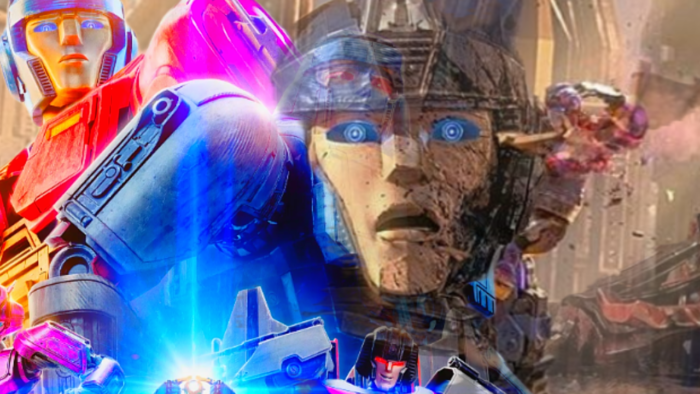
When Transformers One arrived in theaters in September 2024, it carried something the franchise had been missing for years: goodwill. Critics responded positively. Audiences who saw it largely liked it. And for the first time in over a decade, a Transformers film attempted a clear narrative reset rather than another escalation of spectacle.
And yet, despite those advantages, Transformers One failed to break even at the box office — almost certainly ending any plans for a direct sequel. Its failure was not the result of one fatal mistake, but a convergence of timing, branding fatigue, and strategic missteps that overwhelmed an otherwise solid film.
A Long Road to the Screen
The origins of Transformers One date back nearly a decade. In 2015, following Transformers: Age of Extinction, Paramount Pictures assembled a writers’ room to map the future of the franchise. Among those involved were Andrew Barrer and Gabriel Ferrari, who developed the concept for an animated prequel centered on the origins of the Autobot–Decepticon conflict on Cybertron.
The project gained momentum in 2020 when former Pixar animator Josh Cooley was brought on as director. Animation duties were handled by Industrial Light & Magic, signaling a serious technical investment.
At CinemaCon 2023, Paramount formally unveiled the film’s title and voice cast, which included Chris Hemsworth as Orion Pax (Optimus Prime), Brian Tyree Henry as D-16 (Megatron), Scarlett Johansson, Keegan-Michael Key, and Jon Hamm.
Industry outlets such as Variety and Deadline reported a production budget of roughly $75 million, though later reports suggested the real cost may have approached $147 million once animation and post-production were fully accounted for. Regardless of which figure is accepted, the film needed a worldwide gross well north of $150 million to reach profitability.
Box Office Performance Fell Short
Transformers One opened domestically on September 20, 2024, earning approximately $24 million in its opening weekend — below early projections of $30–40 million. It ultimately grossed about $59 million in North America and roughly $70 million internationally, for a worldwide total near $129 million.
By conventional studio accounting, that performance qualifies as a box-office disappointment.
This is particularly notable given the film’s reception. On Rotten Tomatoes, it holds an 89% critics score and a 97% audience score. IMDb users rated it 7.6/10, while Letterboxd logged an average score around 3.8/5. Among those who saw the film, the response was broadly positive.
A Franchise Still Paying for Its Past
The problem was not the film itself, but the state of the brand surrounding it.
The Transformers franchise reached its commercial peak between 2007 and 2014 under director Michael Bay, with several entries surpassing $1 billion worldwide despite increasingly poor critical reception. That strategy collapsed with 2017’s The Last Knight, which reportedly lost Paramount close to $100 million and severely damaged audience trust.
Later attempts to course-correct — including Bumblebee (2018) and Rise of the Beasts (2023) — failed to restore the franchise’s former momentum. By the time Transformers One arrived, the brand no longer had the benefit of automatic turnout.
An animated prequel released nearly a decade after the franchise’s cultural peak could not rely on name recognition alone. It needed to reintroduce Transformers to audiences who had already moved on — and the marketing failed to do that.
Marketing That Misrepresented the Film
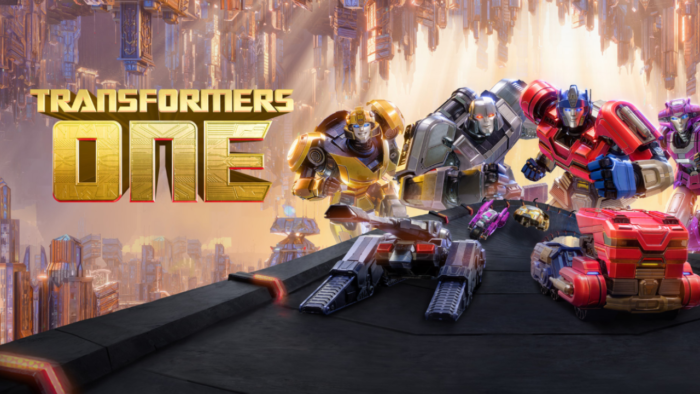
Paramount’s promotional campaign positioned Transformers One as a light, kid-centric comedy. Trailers leaned heavily on broad humor and downplayed the film’s political themes, emotional weight, and action.
This misrepresentation mattered. The actual film explores class division, labor exploitation, authoritarian rule, and the ideological fracture between Optimus Prime and Megatron — material that appeals to older audiences as much as children. Many viewers who eventually saw the film reported being surprised by its depth, having initially dismissed it based on the trailers.
Compounding this issue, the core Transformers audience has aged. Fans who grew up with the 2007 film are now in their late 20s to 40s, while younger audiences lack the same attachment to the brand. The marketing satisfied neither group.
Crushed by Timing and Competition
Release timing also worked against the film. Transformers One debuted just one week before The Wild Robot, another animated family film centered on robots. That film opened to strong reviews and went on to gross over $300 million worldwide.
Positive word-of-mouth for Transformers One was quickly overshadowed, and by its second weekend it fell to third place at the box office. Any momentum it might have built was cut short.
Why the Film Still Matters
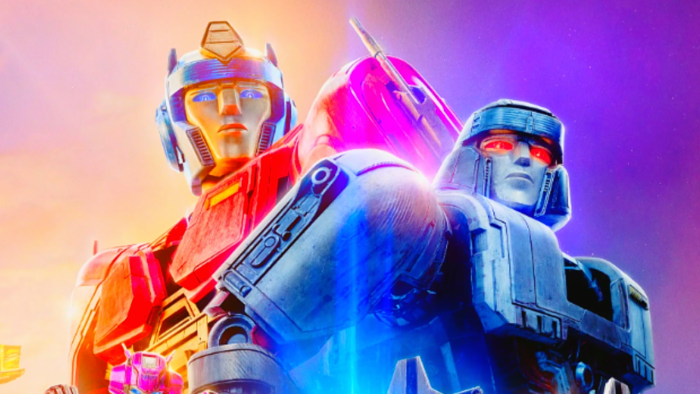
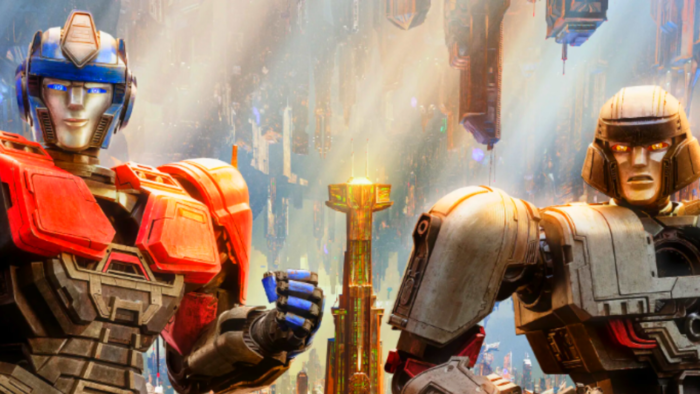
Ironically, Transformers One succeeds precisely where many previous entries failed. It tells a coherent, standalone story that clearly explains the franchise’s core mythology. Its portrayal of Orion Pax and D-16 — childhood friends who become ideological enemies — gives emotional weight to a conflict that earlier films treated as background noise.
The film’s willingness to let Megatron’s transformation unfold through disillusionment rather than sudden villainy gives the story tragic credibility. While some voice performances feel like stunt casting, Brian Tyree Henry’s Megatron stands out as a defining performance.
A Missed Opportunity
Transformers One did not fail because audiences rejected it. It failed because too many never realized what it actually was.
Poor marketing, brand fatigue, unfortunate release timing, and lingering damage from earlier films combined to sink a project that might have marked a true creative reset for the franchise. Instead, it is likely to become a cult favorite — remembered as the film that finally “got it right,” released when it was already too late.
In another timeline, Transformers One is the foundation of a new animated saga. In this one, it stands as a reminder that good films can still fail when the industry around them misreads the moment.