
In an era dominated by streamlined interfaces, guided quest markers, and seasonal content roadmaps, Project: Gorgon stands apart as something increasingly rare: a massively multiplayer online game that refuses to smooth its edges.
Released in full earlier this year after a lengthy period in early access, Project: Gorgon feels less like a modern launch and more like the preservation of a design philosophy many believed had disappeared. It is not a revival, nor an attempt to modernize the past. Instead, it quietly continues a lineage of MMOs that once prioritized curiosity, experimentation, and player-driven discovery over convenience.
A Game Built on Exploration, Not Direction
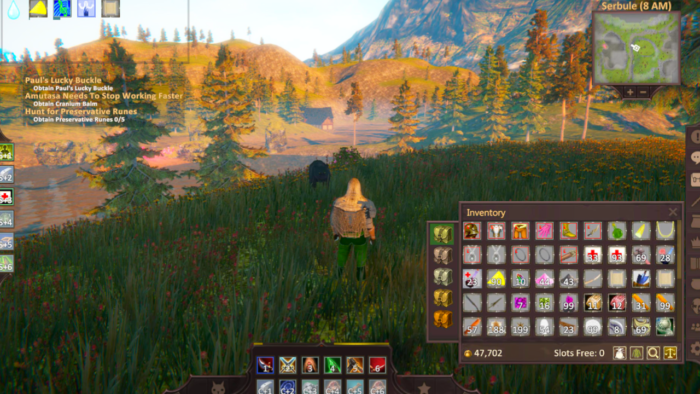
Developed by a small independent team at Elder Game Studios, Project: Gorgon rejects many of the conventions that now define the genre. There are no fixed classes. No glowing exclamation marks guiding players from task to task. Progression is built around individual skills — combat abilities, crafting disciplines, and even unusual transformations — each leveled through use rather than selection.
The result is a world that asks players to pay attention. NPCs matter. Geography matters. Knowledge gained through failure often proves more valuable than any tutorial prompt. The game does not rush players toward an endgame; instead, it invites them to exist within its systems and learn them organically.
For some, this approach feels alien. For others, it feels familiar in a way few modern games do.
A Living Echo of an Earlier MMO Era
It is difficult to discuss Project: Gorgon without acknowledging its spiritual ancestry. The game shares clear DNA with titles like Asheron’s Call and early EverQuest, not in aesthetics or scope, but in philosophy. Those games treated the world as something to be understood rather than consumed, and Project: Gorgon follows that same path.
Unlike nostalgia-driven re-releases or “classic” servers, however, Project: Gorgon is not trying to recreate a specific moment in time. Its systems are experimental, often eccentric, and sometimes unapologetically obtuse. It embraces friction as a feature, trusting that players who stay will do so because they enjoy learning a complex world rather than completing a checklist.
Not for Everyone — and Proud of It
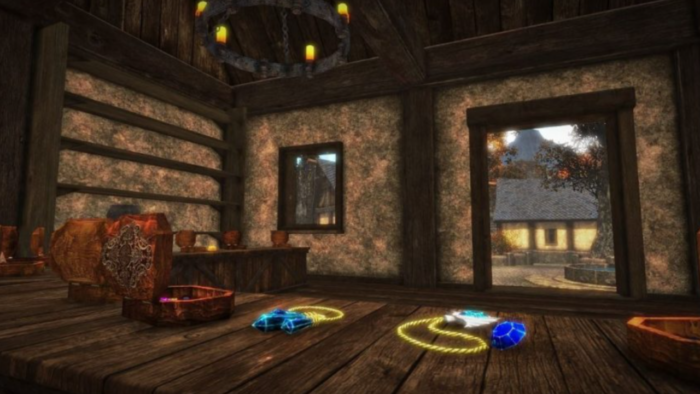
This design choice comes with trade-offs. The game can feel slow, opaque, and unforgiving, particularly to players accustomed to modern MMO conveniences. Visual presentation is functional rather than flashy, and many mechanics require patience to fully understand.
Yet that friction is precisely why Project: Gorgon resonates so strongly with its audience. For players who miss worlds that did not immediately explain themselves, the game offers something rare: the feeling of being a newcomer in a place that does not revolve around them.
Why Project: Gorgon Matters Now
The full release of Project: Gorgon arrives at a moment when the MMO genre has largely consolidated around predictable structures. Even ambitious modern titles tend to share similar rhythms, progression models, and quality-of-life expectations. In that landscape, Project: Gorgon is not competing for mass appeal — it is preserving an alternative.
Its continued existence suggests that there is still room in the genre for slower, stranger, and more personal online worlds. Not every MMO needs to scale to millions. Some exist simply to remind players that the genre once asked them to explore, fail, and learn together without being told exactly how.
A Quiet Legacy Still Being Written
Project: Gorgon may never dominate headlines or redefine the market, but its value lies elsewhere. It serves as a living artifact — proof that old-school MMO design is not merely something to be archived or emulated, but something that can still grow, adapt, and find an audience willing to meet it on its own terms.
In doing so, it offers a gentle reminder: sometimes the most enduring online worlds are not the ones that move fastest, but the ones that trust players enough to let them get lost.