

Every anime season arrives with momentum already decided. Big sequels dominate discussion before they air, established franchises absorb most of the attention, and new shows often get judged within a single episode. In that environment, quieter series tend to slip through the cracks, not because they lack quality, but because they are not built for instant impact.
You and I Are Polar Opposites enters the season without spectacle. It does not rely on high stakes, exaggerated comedy, or immediate emotional payoff. Instead, it positions itself as something smaller and more patient, trusting that viewers willing to slow down will notice what it is doing differently.
The series centers on two high school students whose personalities sit on opposite ends of the emotional spectrum. One is outward-facing, expressive, and comfortable acting on impulse. The other is reserved, internal, and cautious, someone who processes thoughts privately before sharing them. The setup sounds familiar, but the show does not treat this contrast as a gimmick. It treats it as a long-term condition that shapes how people misunderstand each other.
Rather than rushing toward romance, the story focuses on the space between connection and confusion. Conversations feel incomplete. Reactions arrive late. Characters say things they do not fully understand yet and only realize the weight of those words afterward. The series is not interested in quick resolutions. It is interested in how emotional awareness develops over time.
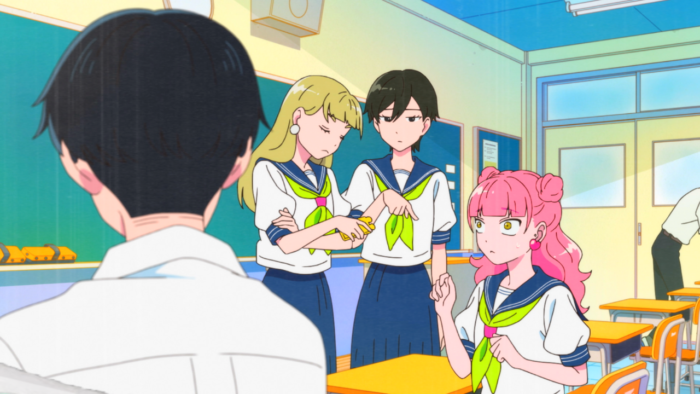
This approach changes how each episode functions. Progress is subtle, but it is real. Small moments carry forward rather than resetting. A hesitation in one episode becomes confidence later. A misunderstanding lingers instead of disappearing for convenience. The characters are allowed to grow gradually, in ways that feel earned rather than announced.
What makes this stand out in a crowded season is restraint. The show avoids the exaggerated reactions that dominate many romantic comedies. Humor comes from social friction rather than slapstick. Emotional tension comes from uncertainty rather than manufactured drama. Silence is used intentionally, allowing scenes to breathe instead of rushing to explain what the audience is already seeing.
Visually, the anime supports this tone. The animation does not call attention to itself, but it is careful. Facial expressions linger. Body language communicates what dialogue avoids. Framing often emphasizes emotional distance before slowly closing it as understanding grows. Nothing feels wasted, and nothing feels overstated.

This subtlety is why the show has begun to resonate with viewers who initially overlooked it. Week by week, discussion around the series has grown, not through viral moments, but through steady recommendation. Fans describe it as the show they did not expect to care about but now look forward to consistently. That kind of response tends to build slowly, but it lasts longer.
The series also benefits from trusting its audience. It does not explain every feeling or restate its themes. It assumes viewers can connect moments across episodes and recognize emotional patterns without being told explicitly. In a medium that often spells everything out, this confidence feels refreshing.
Calling You and I Are Polar Opposites a diamond in the sea of anime is less about hype and more about contrast. It exists in the same seasonal lineup as louder, faster, more immediately rewarding shows, yet it chooses a different path. It asks for attention instead of demanding it. It rewards patience rather than spectacle.
As the season continues, the show’s reputation is forming quietly. Not as a breakout hit built on shock value, but as a carefully constructed story that understands how relationships actually develop. For viewers willing to look past the surface noise of the season, it offers something rare: a romance that feels lived in, thoughtful, and honest.
Sometimes the most memorable anime are not the ones that announce themselves as important. They are the ones that wait to be noticed, confident that if you keep your eyes open, you will recognize their value on your own.