

At first glance, Fire Force presents itself as a story built on motion. Fire tears through city streets, characters clash in bright bursts of heat and light, and danger is always close enough to feel immediate. It is easy to take the series at face value and see it as a show driven by action and spectacle.
But when the noise settles, what remains is something quieter.
Fire Force takes place in a world where spontaneous human combustion is not rare, not shocking, and not treated as an ending. People still go to work. Streets are rebuilt. Life continues alongside the expectation that anyone, at any time, could burn. The series does not frame this as resilience so much as adaptation. The world has learned how to move forward without asking too many questions about why things keep breaking.
That sense of acceptance shapes everything that follows.
Shinra Kusakabe enters the story wanting to be a hero, but not in the way heroes are usually written. His desire does not come from confidence or destiny. It comes from loss. Becoming a hero gives him language for pain he never had the chance to process. It allows him to believe that the fire that destroyed his family fits into a larger pattern, one where suffering leads somewhere meaningful.
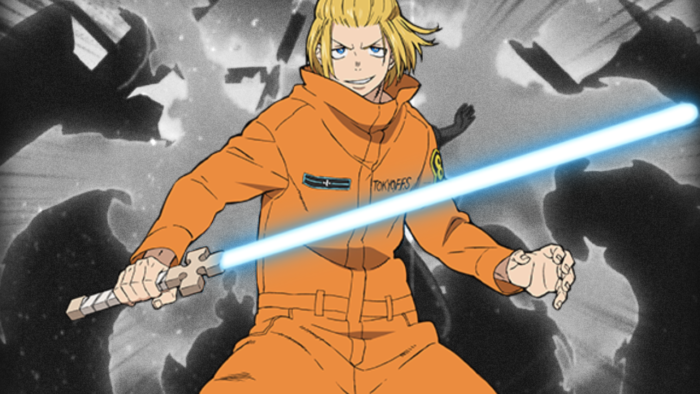
For a long time, that belief holds.
As Shinra grows stronger, the series slowly removes the comfort that belief provides. Answers arrive, but they are not reassuring. Fire Force does not offer its protagonist a clear explanation that justifies what he has lost. Instead, it introduces uncertainty and asks him to keep moving without the promise that everything will make sense in the end.
This shift becomes clearer with the introduction of Adolla. Rather than functioning as a simple supernatural realm, Adolla reflects the fears and expectations of the world itself. It exists because people believe destruction is inevitable. It gains strength as individuals stop imagining alternatives. The more the world accepts burning as its natural state, the more real that future becomes.
The antagonists understand this. Their certainty is not rooted in cruelty but in exhaustion. In a world shaped by endless disaster, believing that everything is meant to end can feel easier than believing it can be repaired. Fire Force does not rush to condemn this mindset. It lets it exist, quietly unsettling, because it mirrors something familiar.
As the story moves toward its conclusion, the pacing changes. The series allows scenes to linger. Conversations matter more than clashes. Characters are given space to sit with the realization that stopping the fire may not restore what was lost, because the world they remember was already fragile.
Nothing is rushed. Nothing is framed as triumphant.
By the end, Fire Force does not feel like a story about saving the world from flames. It feels like a story about learning how much destruction people can live alongside before they stop believing change is possible at all. It leaves the viewer with that thought, unspoken but present, and trusts them to carry it forward on their own.
The fire never mattered as much as what people chose to do while standing in its glow.