
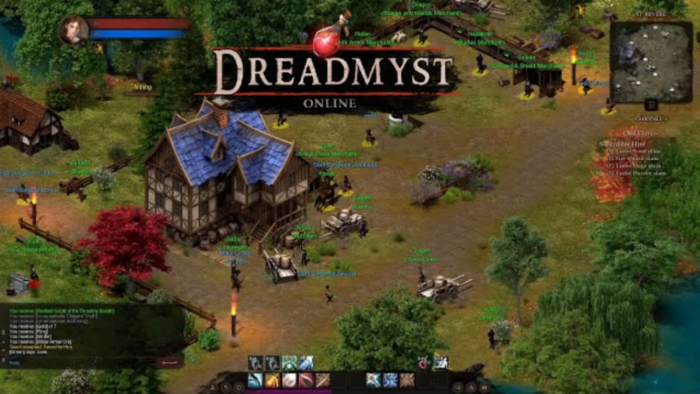
Dreadmyst is a newly released free-to-play isometric MMO that launched on PC in January 2026. It entered the MMO space quietly, but it is drawing attention for its focus on traditional MMO systems, minimal monetization, and dungeon-driven progression.
Rather than positioning itself as a genre reinvention, Dreadmyst presents a clear, focused experience built around classic MMORPG fundamentals, which becomes clear once its core design is understood.
Core Identity and Gameplay Style
Dreadmyst is an online fantasy RPG with MMO structure and isometric presentation. Combat uses a tab-target system, emphasizing positioning, cooldown management, and group coordination rather than action-based inputs.
The game currently features four classes:
- Paladin (tank)
- Mage (ranged damage)
- Ranger (agile DPS)
- Cleric (healer/support)
Each class has clearly defined roles, and group content is designed around traditional party composition rather than flexible or hybrid playstyles.
This class clarity directly shapes how progression works.
Progression and Character Development
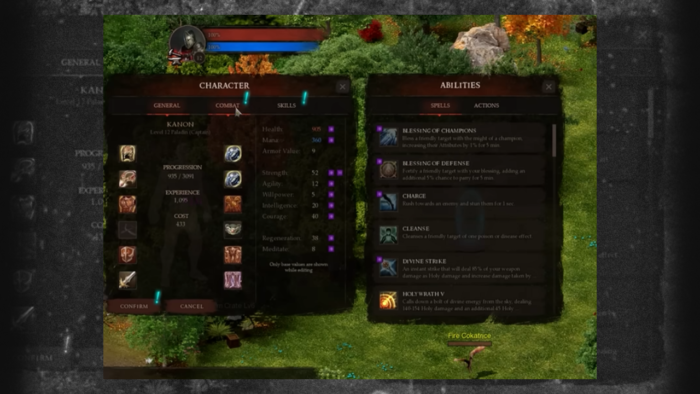
Players level through standard experience gain and manually allocate stat points such as Strength, Agility, Intelligence, and Willpower. Builds are shaped through skill trees rather than preset loadouts.
Respecialization is available but limited, encouraging players to commit to builds rather than constantly adjust. At higher levels, progression shifts toward gear improvement and Combat Rating tiers, which function as long-term benchmarks rather than soft caps.
This progression model feeds directly into the game’s primary content focus.
Dungeons as the Primary Content Loop
Dungeons are the core of Dreadmyst’s PvE experience.
- Group dungeons require balanced parties and emphasize boss mechanics, crowd control, and positioning.
- Solo dungeons exist for individual progression and skill testing.
- Higher-tier dungeons require better gear and coordination, reinforcing a gradual progression curve.
Unlike MMOs where dungeons serve as side content, Dreadmyst places them at the center of character advancement.
That same systems-first approach applies to PvP.
PvP Structure and Competitive Play
Dreadmyst includes both structured and open PvP:
- 1v1 and 2v2 arenas with rankings
- Open-world PvP zones tied to objectives and rewards
PvP uses the same stat, gear, and ability systems as PvE, meaning progression carries across modes. There are no separate PvP builds or isolated mechanics, keeping the experience consistent.
This consistency reflects the game’s broader development philosophy.
Development Model and Monetization
Dreadmyst is developed by a very small indie team using a custom engine. At launch, the game is entirely free to play, with no subscription, no cash shop pressure, and no pay-to-win systems.
Monetization has been intentionally delayed while the developers focus on stability, balance, and content iteration. Planned updates include additional dungeons, expanded crafting systems, and long-term progression features.
This approach positions the game as an evolving project rather than a finished commercial product.
What Kind of MMO Dreadmyst Is
Dreadmyst is designed for players who want:
- Clear class roles
- Dungeon-focused progression
- Traditional MMO pacing
- Minimal monetization interference
It is not a sandbox MMO, not a massive open-world social platform, and not a fast-paced action RPG. It is a structured, systems-driven MMO built around cooperation and gradual improvement.
That clarity makes it easier to understand who the game is for.
Conclusion
Dreadmyst is a small-scale MMO with a clear focus on classic design principles. It prioritizes dungeons, defined roles, and long-term progression over spectacle or monetization hooks.
For players looking for a traditional MMO experience without subscriptions or aggressive systems, Dreadmyst is a title worth paying attention to as it continues to develop.