
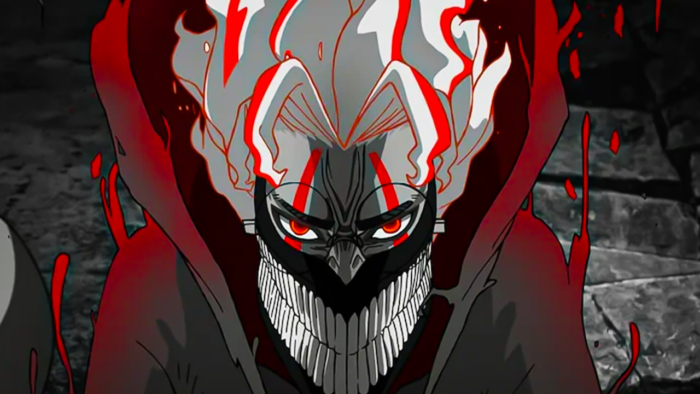
For a long time, Dandadan already had one of the most entertaining power systems in modern manga. It was chaotic in the best way. Psychics, yokai, ghosts, aliens, cursed objects—everything existed together without strict rules telling you what could or couldn’t happen. And somehow, it worked. That looseness gave Dandadan its identity. It kept fights unpredictable and made the world feel dangerous.
But that same freedom also hid a problem that became more noticeable as the series grew. While the powers were fun, there wasn’t anything tying them together. No shared mechanic. No universal upgrade path. No real sense that different abilities were interacting with each other on equal footing. Most fights were decided moment to moment by the story rather than by how abilities logically clashed. That isn’t a flaw that breaks a series, but it does limit how far a power system can go.
And that’s where Spiral comes in.
What’s interesting is that Spiral wasn’t introduced as a flashy power-up or a dramatic reveal. Back in chapter 94, Turbo Granny casually explains that all creation is born from spirals, even human DNA. At the time, it felt like strange flavor lore, mostly there to explain how spirits move through things like power lines. The story moved on, and Spiral didn’t seem important. For more than a hundred chapters, it just sat there in the background.
Then chapter 205 happened, and suddenly that throwaway explanation became the most important idea in the entire series.
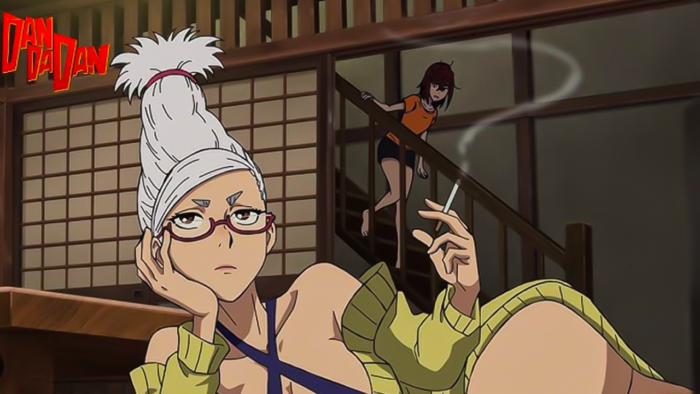
When Seiko teaches Jiji how to rotate his energy in a specific direction, Spiral stops being theory and becomes function. For the first time, a physical attack damages a true ghost—not a yokai with a body, but an actually intangible being like the Red Baron. That moment quietly rewrites the rules of combat. Attacks no longer just pass through certain enemies. Rotation itself becomes the bridge between the physical and the ethereal.
That single change fixes two massive issues at once, and this is where Dandadan’s power system really levels up.
First, Spiral means anyone can now fight ghosts. Before this, fully intangible enemies were almost unbeatable by design. You couldn’t hit what wasn’t there. Spiral changes that by letting energy interact with things that shouldn’t be touchable. That’s a huge deal when the story keeps escalating toward larger supernatural threats, especially with the growing number of enemies tied to the main villain.
At the same time, Spiral does something even more important. It gives every character a way to grow without needing brand-new abilities. Spiral isn’t a move. It’s a multiplier. Anything a character already does—energy blasts, physical attacks, weapons—can now be amplified, refined, and altered simply through rotation. That kind of system is what separates good shōnen power scaling from power creep.
This is also why Spiral feels familiar if you’ve watched enough anime. There’s a reason it keeps showing up in some of the most respected series in the genre.
In Gurren Lagann, Spiral Energy represents life, evolution, and forward motion itself. DNA is a spiral. Growth is a spiral. The final villains are literally the Anti-Spiral, beings who exist to stop progress. Dandadan’s explanation of Spiral lines up almost perfectly with this idea, tying rotation directly to existence and life force.
Then there’s JoJo’s Bizarre Adventure, specifically Steel Ball Run, which introduces the Spin. The Spin is based on the golden ratio, a mathematically infinite spiral found throughout nature. Through perfect rotation, users can generate endless energy, bypass physical limits, and break the laws of reality without relying on traditional “magic.” It’s absurd, but it works because it’s consistent.
Dandadan sits right between these two ideas, and in some ways, it might be even more flexible. The series introduces directional rotation, meaning different spins produce different effects. That opens the door to variations of the same attack, tactical decision-making mid-fight, and real interactions between abilities. For the first time, Dandadan has the potential for true rock-paper-scissors combat without losing its chaotic charm.
This also completely reframes what happened to Okarun.
When Okarun lost his powers, it initially felt like a hard reset. But with Spiral in the picture, it now feels intentional. Spiral doesn’t care whether you’re psychic or cursed. It rewards technique. His new ogre bat isn’t just a replacement weapon—it’s a foundation. With Spiral, his swings can be enhanced, rotated, and adapted to fight even enemies like the Red Baron. Spiral quietly levels the playing field and keeps powerless characters relevant.
And once you realize that, it becomes clear that Spiral isn’t just about individual fights. It’s about where the story is going.
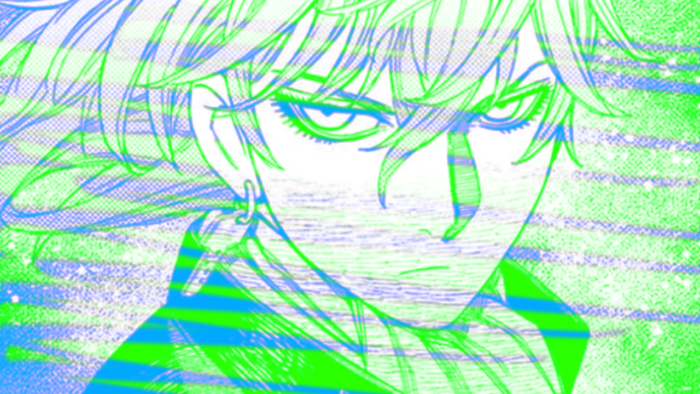
Count Saint Germain isn’t dangerous because he’s strong. He’s dangerous because he’s limitless. He steals abilities, collects powers, and commands both yokai and aliens. He represents unchecked accumulation, the kind of power creep that normally forces a series into absurd escalation. Characters like him can’t be beaten by stacking even more abilities on top.
They can only be beaten by infinity itself.
That’s where the Dandadan comes in.
When Saint Germain references the Dandadan, the imagery is telling. Mandalas. Circles. Repeating geometric patterns. Mandalas aren’t random symbols—they’re mathematical and spiritual constructs. Geometry, especially the golden ratio, is central to Spiral theory. If the Dandadan represents godhood, rebirth, or immortality, then Spiral—growth, motion, and infinite progression—is the natural counter.
All of this points to an ending that doesn’t rely on a single ultimate attack or one character becoming absurdly overpowered. Instead, Dandadan seems to be building toward every character mastering Spiral in their own way. Not new abilities, but evolved versions of what they already have. Not stolen power, but refined power.
Spiral doesn’t replace Dandadan’s power system. It completes it.
It brings balance without rigidity, growth without power creep, and infinity without chaos. And more than anything else, it finally gives Dandadan a foundation strong enough to support whatever ending Yukinobu Tatsu has planned.